3D Printer Enclosure: Keep Heat In, Dust Out, Warping Down
A 3D printer enclosure holds heat, blocks drafts, and cuts dust. Start with a proven tent if your machine is open-frame and the room runs cool.
By Nate Brooks
3Dprintpicks is reader-supported. As an Amazon Associate we earn from qualifying purchases. Learn more.
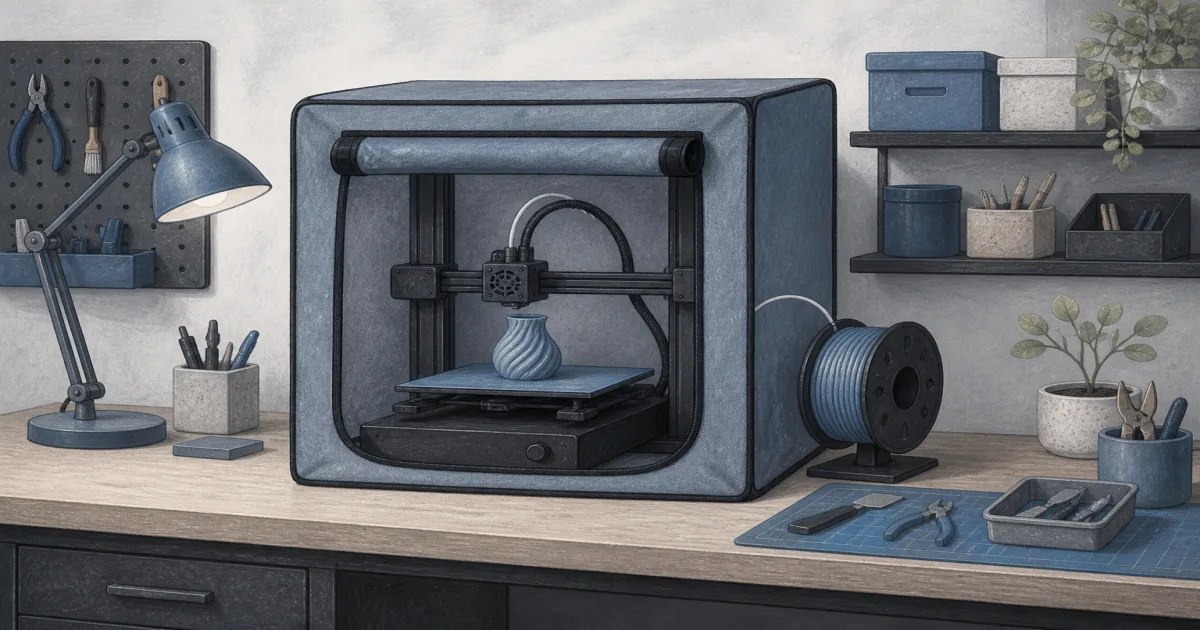
The short answer: Buy the Comgrow 3D Printer Enclosure if you run an open-frame Ender-class machine in a cool or drafty room. Choose the Creality Official 3D Printer Enclosure for a listed Ender 3 V3 SE fit.
Our picks
A 3D printer enclosure is a box or tent that holds warm air around the frame. You want one when PETG corners lift, ABS cracks, or a ceiling vent blows across the bed. You do not need one to print a PLA hook on a calm desk.
These picks are research-based from live US Amazon listings, specs, and long-running buyer reviews. We have not built a plywood chamber in a lab. Pair an enclosure with a machine from best budget 3D printer or best 3D printer under $300 if you are still shopping the frame itself.
When an enclosure actually helps
Open-frame printers lose heat fast. A cool basement, an AC vent, and a winter window are the usual villains. Corners curl. Layer bonds go weak. Dust settles on the bed between jobs.
An enclosure keeps that air still and warmer. It also keeps cat hair and workshop grit off the rails. That is the whole job. It is not a fireproof vault, and it is not a substitute for dry filament.
If you already own an enclosed CoreXY such as the machines in best 3D printer, skip the tent. You already paid for walls.
Measure the printer before you click buy
Tents list inner size, not “it will probably fit.” Measure width, depth, and height with the spool holder on. Add a little room for your hand to reach the screen and the USB port.
AMS units, dual-spool dryers on top, and camera mounts steal height. A “fits Ender 3” claim can still fail if you stacked extras. Write the three numbers on tape and keep them next to the listing.
If the tent is tight, you will fight zippers every time you swap a nozzle. Buy the size that leaves a palm of space, not the one that looks neater in a photo.
Top pick: Comgrow tent
The Comgrow 3D Printer Enclosure is the default for most home Ender-class desks. The US listing sits at 4.6 stars with well over a thousand owner notes about heat, dust, and simple pipe assembly. People who print PETG in cool rooms keep saying the corners stop lifting after they zip it up.
It is a fabric tent on an iron-pipe frame, not a polycarbonate cabinet. That is fine for home use. You get windows, tool pockets, and a cover that folds when guests need the table.
Skip it if you want a hard chamber with filtered exhaust. This is a warm box, not a lab hood.
Official fit: Creality cover
The Creality Official 3D Printer Enclosure is the OEM-shaped option when you run an Ender 3, Ender 3 V3 SE, or V3 KE and want the listed cover. The review count is smaller than Comgrow, but the 4.3-star pattern still reads like real owners talking about fit and drafts, not empty five-star spam.
Choose this if matching the brand on the printer matters to you, or if you already trust Creality spare parts. Functionally it does the same job: hold heat, block dust, unzip to reach the bed.
If the tent is too tall for the desk
Skip any listing that does not publish inner height, and skip add-on AMS or top-mounted dryers until you have the three measurements on tape. A tent that clips the spool arm is a return, not a bargain. Comgrow and the official Creality cover both fit classic Ender 3 frames; measure extras before you assume a “mini” label will save you.
PLA, PETG, and ABS inside a tent
PLA often wants cooling. If you enclose PLA tightly, you can get heat creep or a shiny, overcooked look. Leave a zipper open or run the part fan as usual.
PETG likes the still air. ABS and ASA like it even more. Dry those spools first. An enclosure will not fix wet filament that pops in the nozzle. For drying habits, see filament dryer.
Do not print huge ABS sculptures in a fabric tent and call it industrial. Keep parts modest, and vent the room after the job.
Safety notes that are not optional
Keep a smoke detector in the room. Do not park the tent against curtains. Do not leave a first print unattended overnight until you know the machine. The “fireproof” label on tent fabric means the cover is slower to spread flame. It does not mean you can ignore the printer.
Power bricks and heated beds still get hot. Give the PSU air. Do not bury cables under the floor of the tent.
Setup in one evening
- Assemble the pipe frame on the floor, then stand it over the printer
- Zip three sides, leave the front open, and home the printer so nothing hits fabric
- Run a small PETG or PLA cube with the front closed enough to block the vent
- Check that the screen, USB, and emergency stop stay reachable
- Add a cheap thermometer inside if you print ABS and want a number, not a guess
If the frame wobbles, reseat the corner joints before you blame the printer.
Bottom line
A 3D printer enclosure is worth it when drafts and cool air wreck open-frame prints. The Comgrow 3D Printer Enclosure is the high-confidence tent for most Ender-class desks. Take the Creality Official 3D Printer Enclosure for a listed V3 SE fit. Measure the machine with every add-on attached, then zip up and print.
Frequently Asked Questions
Do I need a 3D printer enclosure for PLA?
Usually no. PLA likes cooling. Close the tent only if drafts ruin the first layer, or leave a panel unzipped so the part fan can do its job.
Will an enclosure make ABS print reliably?
It helps a lot by holding heat and blocking room air. It is not a magic chamber. Dry filament, a clean bed, and realistic part size still matter.
Is a tent safer than an open printer?
It cuts dust and keeps curious hands off moving parts. It does not replace a smoke detector, a clear floor, and unattended-print common sense.
Can I enclose a Bambu P1S or X1?
Those machines already have a hard enclosure. A fabric tent on top is redundant. Save the tent for open-frame Ender-class desks.
Will an enclosure make the printer quieter?
A little. Fabric tents dull fan noise. They will not turn a loud machine into a library printer.