3D Printer Lubricant: Grease the Rails, Oil the Screws, Skip the Mess
A 3D printer lubricant kit is a small grease tube for rails plus a light oil for screws. Follow the printer maker first. A thin film beats a white glob.
By Nate Brooks
3Dprintpicks is reader-supported. As an Amazon Associate we earn from qualifying purchases. Learn more.
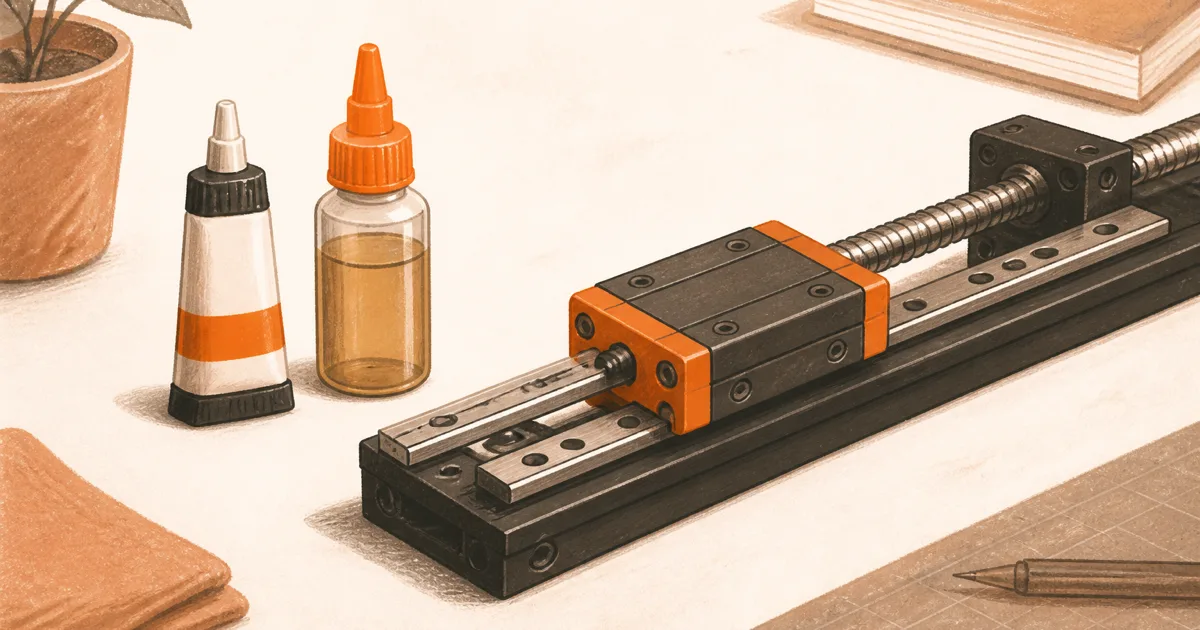
The short answer: Keep Super Lube 21030 for rails and bearings and Super Lube 51004 for lead screws and light-oil spots. Follow the printer manufacturer first. A thin film after a wipe beats a white glob that collects dust.
Our picks
3D printer lubricant is a maintenance item, not a performance upgrade sticker. Dry rails sound rough. Over-greased rails collect pet hair and filament dust, then feel worse than before. The job is a clean, thin film on the parts the maker named.
This kit is research-based from live US Amazon listings and typical home FDM service notes. We have not torn down every printer brand. If the manual names a specific grease, use that. For the rest of the bench pouch, see 3D printer maintenance kit.
What to lubricate (and what to leave alone)
Lubricate:
- Linear rails and rods if the maker says grease
- Lead screws and similar screws if the maker says oil
- Bearings that are designed to be serviced
Leave alone:
- Rubber belts
- Electrical plugs and boards
- The build plate
- The nozzle and heat break (that is a different cleaning job)
If you are not sure whether a part is supposed to be wet, stop and read the machine page. Guessing is how people oil a carbon-fiber rod that wanted to stay dry.
Kit item 1: Super Lube 21030 grease
Super Lube 21030 is the rail-side pick. It is a 3 oz PTFE synthetic grease with a 4.8-star US listing and thousands of reviews, which is the pattern you want for a boring maintenance SKU. A small tube lasts a long time on a single home printer.
Wipe the rail or rod first. Apply a thin film. Move the axis through full travel so the film spreads. Wipe the obvious extra. You should see a sheen, not a snowbank.
Skip this tube if your printer uses a sealed carriage the maker says never to open. Sealed-for-life parts are not a DIY grease party.
Kit item 2: Super Lube 51004 oil
Super Lube 51004 is the light-oil pick for lead screws and other spots the manual calls oil. The live US listing is also 4.8 stars with a large review history. A 4 oz bottle is more than a home desk needs for years if you are not bathing the machine.
A drop or a light wipe is enough. Oil that runs onto a belt or a connector is a mess. Keep a paper towel in the 3D printer tools kit and treat this like cooking: you can add a little, you cannot un-pour a puddle.
A simple service loop
Use this loop after you have a working printer, not during a failed first-layer panic:
- Unplug or power down as the maker recommends.
- Look at rails, screws, and belts. Dust first, lube second.
- Wipe old residue. Do not stack new grease on black grit.
- Apply the matching product. Grease or oil, not both on the same surface unless the manual says so.
- Jog the axes. Listen. The motion should sound smoother, not soggy.
If a rail still scrapes after a thin film, the problem may be a bent gantry, a tight eccentric nut, or debris in a bearing, not a lack of Super Lube.
Dust, pets, and open-frame printers
Open printers collect dust faster. A thick grease layer becomes sandpaper. Enclosed machines stay cleaner but still need the same thin-film rule.
If you print abrasive-filled filament, clean around the motion system more often. Lube does not replace wiping grit off a rail.
What not to buy
Skip mystery “3D printer lube syringes” with no chemistry and ten reviews. Skip automotive gear oil unless the maker named it. Skip spraying the whole frame because a video used the word “maintenance.”
Also skip lubricating a brand-new printer on day one unless the unboxing sheet says to. Some machines ship pre-lubed. Extra grease on day one is just extra dirt. A clean rag in the tools pouch is part of the kit, not an afterthought.
Noise, squeaks, and what lube will not fix
A dry lead screw can squeak. A loose belt can also squeak. Lubricant will not tension a belt or straighten a bent gantry. If the sound is rhythmic with belt teeth, check tension before you oil anything.
If an axis binds at one point in travel, look for a ding in the rail, a wire rubbing, or a squashed cable chain. Grease will not fill a dent.
When to stop and open a ticket
If the printer is under warranty and the maker says not to open a carriage, stop. A thin wipe on an exposed screw is different from prying a sealed bearing. Keep a photo of the rail before and after service if you ever need support.
Brand-new machines that already sound rough may have shipping damage. Lubricant is not the first fix for a bent frame.
Soft CTA
For the rest of the small tools, open 3D printer maintenance kit. For a first-week pouch, see 3D printer tools kit. More guides sit on the blog and the homepage.
Bottom line
A 3D printer lubricant kit is Super Lube 21030 for rails and Super Lube 51004 for screws, used as a thin film after a wipe. Follow the printer maker, keep lubricant off belts and electronics, and stop when the axis sounds smooth instead of sticky.
Frequently Asked Questions
What 3D printer lubricant should I buy first?
Match the part. Grease for rails and bearings if the manual says grease. Oil for lead screws if the manual says oil. Our kit is Super Lube 21030 grease plus Super Lube 51004 oil.
Can I use WD-40 on a 3D printer?
Do not treat WD-40 as printer grease. Use what the manufacturer specifies. The wrong spray can strip a film you needed or attract grit.
How often should I lubricate a 3D printer?
Follow the printer manual. A common home habit is a visual check every few weeks of printing, then a thin reapply when rails look dry or motion sounds rough. Do not slather on a schedule just because a video said “weekly.”
Should linear rails get oil or grease?
Many rail systems want a thin grease film. Many lead screws want a light oil. Read the specific machine page. Guessing is how people get sticky gantries.
Can I over-lubricate a printer?
Yes. Extra grease becomes a dirt magnet. Wipe old residue, then apply a thin film and move the axis through its travel so it spreads.
Is Super Lube safe on plastic parts?
Super Lube products are widely used on mixed metal and plastic machines. Still keep lubricant off belts, electrical connectors, and the print surface. Follow the SDS and your printer maker.
Do CoreXY and bedslingers use the same lube?
The chemistry can be the same. The parts differ. Lubricate the rails, rods, and screws your machine actually has, not a generic “all printers” blob.