Best 3D Printer for Miniatures: Fine Detail Without a Messy Setup
For tiny faces, armor, and tabletop pieces, a compact resin printer usually gives cleaner detail than FDM. Pick the plate size that matches your models and leave room for washing and curing.
By Nate Brooks
3Dprintpicks is reader-supported. As an Amazon Associate we earn from qualifying purchases. Learn more.
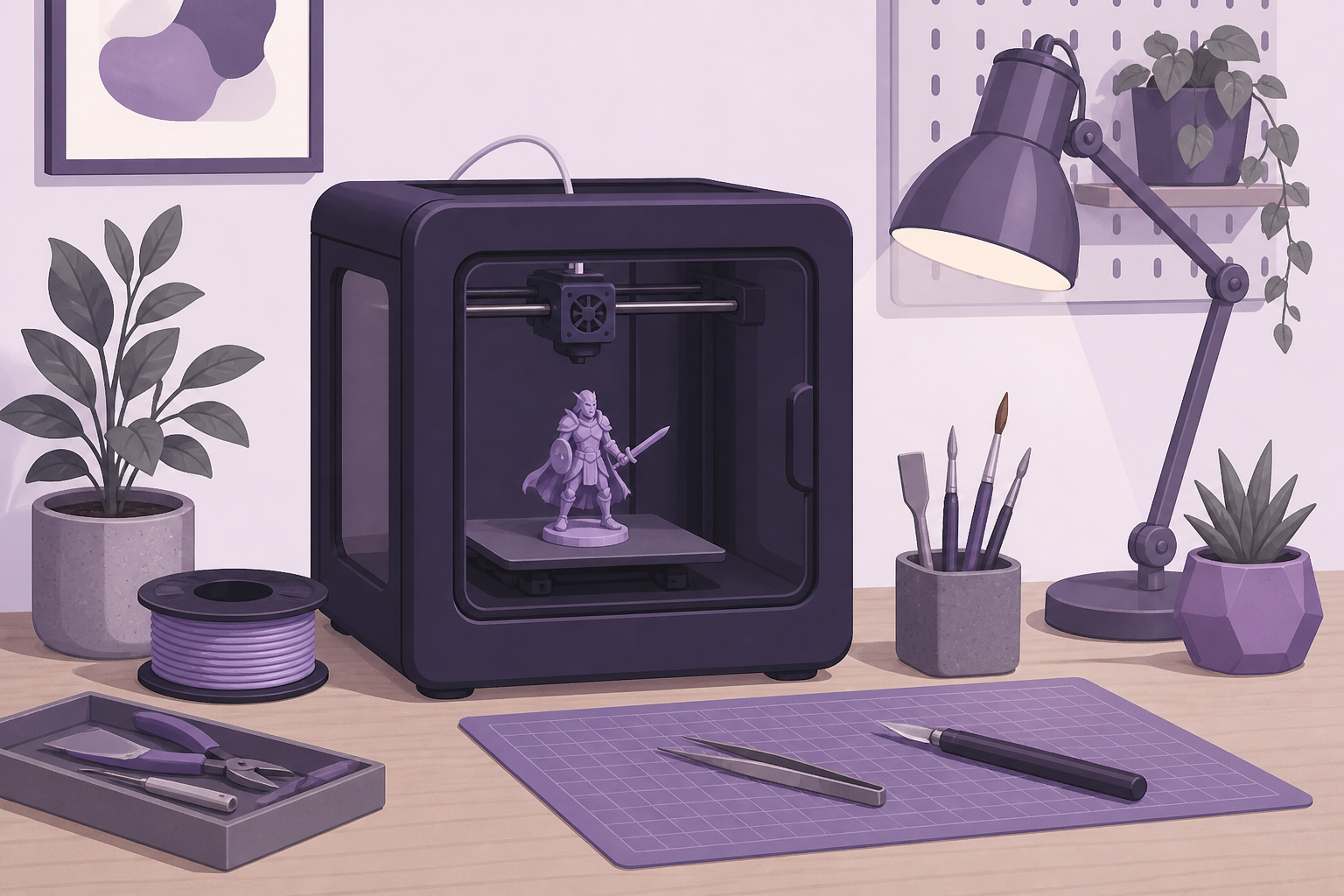
The short answer: The ANYCUBIC Photon Mono 4 is the sensible first 3D printer for miniatures if you want crisp figures without giving up half a workbench. Choose the ELEGOO Saturn 4 Ultra 16K when you need bigger terrain pieces or several figures on one plate.
Our picks
This reader-supported guide uses Amazon links. As an Amazon Associate we earn from qualifying purchases. Learn more.
The best 3D printer for miniatures is usually a resin printer, not because FDM is bad, but because miniature surfaces ask for tiny details. Resin handles faces, chain mail, and small text with less visible layering. FDM is still useful for terrain, organizers, and big props. It is simply not the easiest path to a clean 28 mm figure.
These recommendations are research-based from live US Amazon listings, listed specifications, and buyer review patterns. We have not lab-tested every printer. The two picks below are live Amazon.com products with ratings above four stars and review histories that include actual printing notes, not just delivery comments.
Start with the room, not the resolution number
Resin printing needs a place where spills are manageable. You need gloves, paper towels, a covered spot for uncured resin, and airflow that does not send the smell through your living space. A spare desk in a garage or workshop is easier than a bedroom corner.
Do not buy a huge printer because the product page says 16K. A larger plate is helpful for terrain and squads. It also means more resin, more supports, and more cleanup when one print fails. For one character or a few small monsters, a compact machine is less intimidating.
If that setup sounds like work you do not want, look at an FDM machine in our best 3D printer guide. A well-tuned FDM printer can make terrain and useful gaming accessories without the resin routine.
Best compact 3D printer for miniatures: Anycubic Photon Mono 4
The ANYCUBIC Photon Mono 4 is the right starting size for most miniature painters. Its compact 10K resin setup puts the emphasis on fine detail instead of a giant build area. That is useful when your usual job is a few figures, heads, weapons, or base details rather than a whole costume.
The live US listing has a 4.2-star pattern with hundreds of ratings. The useful feedback focuses on detail and normal setup frustrations, which is more helpful than a page full of “looks great” reviews. You still have to dial in exposure for your resin and supports. No resin machine gets around that.
Buy it if you want a manageable first resin station. Skip it if your regular plan involves large dragon wings, vehicle hulls, or a full army on every run. Those jobs justify the larger ELEGOO plate.
Choose the Saturn when batch size matters
The ELEGOO Saturn 4 Ultra 16K earns the larger-slot recommendation because it gives you more room for terrain, busts, and several miniatures at once. Its tank heating also helps when a cool workshop makes resin thick and fussy.
The tradeoff is not subtle. A failed large plate wastes more resin and creates more cleanup. This is a better purchase once you know you enjoy resin printing and have a workflow for washing, curing, and disposal. It is not the “better” printer just because it costs more.
For a wider comparison of home resin printers, read best resin 3D printer. That guide is broader. This page is about the miniature buyer who needs detail first.
The setup kit you should plan for
The printer is only the first box. Keep nitrile gloves, a washable work mat, a way to wash prints, and a UV curing method in the same area. A dedicated beginner resin kit makes this easier to plan before you have a sticky bottle open.
Supports matter as much as printer choice. Angle the miniature so broad, flat surfaces do not pull hard on the FEP film. Put supports where sanding will be less visible. Print a small exposure test before you fill a plate with a detailed model you care about.
Keep uncured resin away from drains and regular trash. Cure residue fully before disposal, then follow local rules. It is boring advice, but it is the difference between a hobby desk and a permanent mess.
When FDM is the smarter miniature choice
FDM makes sense for terrain, storage, movement trays, and larger game pieces where layer lines are less important. It is also a more comfortable first printer if the workspace cannot support resin ventilation and cleanup.
For tiny display figures, resin wins. For a modular dungeon wall or a helmet-sized prop, FDM is cheaper and easier. Plenty of hobbyists use both because they solve different jobs.
Bottom line
Buy the ANYCUBIC Photon Mono 4 for most home miniature projects. It keeps the bench and resin volume manageable while giving you the detail that makes resin worthwhile. Move to the ELEGOO Saturn 4 Ultra 16K when you know you need bigger parts or full batch printing. Before either purchase, make room for safe washing, curing, and ventilation.
Frequently Asked Questions
Is resin or FDM better for miniatures?
Resin is better when fine faces, armor, and surface texture matter. FDM is cheaper and cleaner for terrain and larger props.
Can I keep a resin printer in a bedroom?
It is not a good default. Use a dedicated, ventilated area and keep resin, alcohol, and cured waste contained.
Do I need a wash and cure station?
Yes, or an equally careful manual wash and UV-curing setup. It makes the resin workflow much less messy.
What size resin printer should I buy for tabletop miniatures?
A compact plate is enough for most figures. Buy a larger plate only if you regularly print terrain, vehicles, or batches.