Best 3D Printer Filament: PLA vs PETG Without the Guesswork
Most clog stories are wet spools or the wrong material for the job. We compare trusted PLA and PETG picks so your next print sticks for the right reason.
By Harper Lin
3Dprintpicks is reader-supported. As an Amazon Associate we earn from qualifying purchases. Learn more.
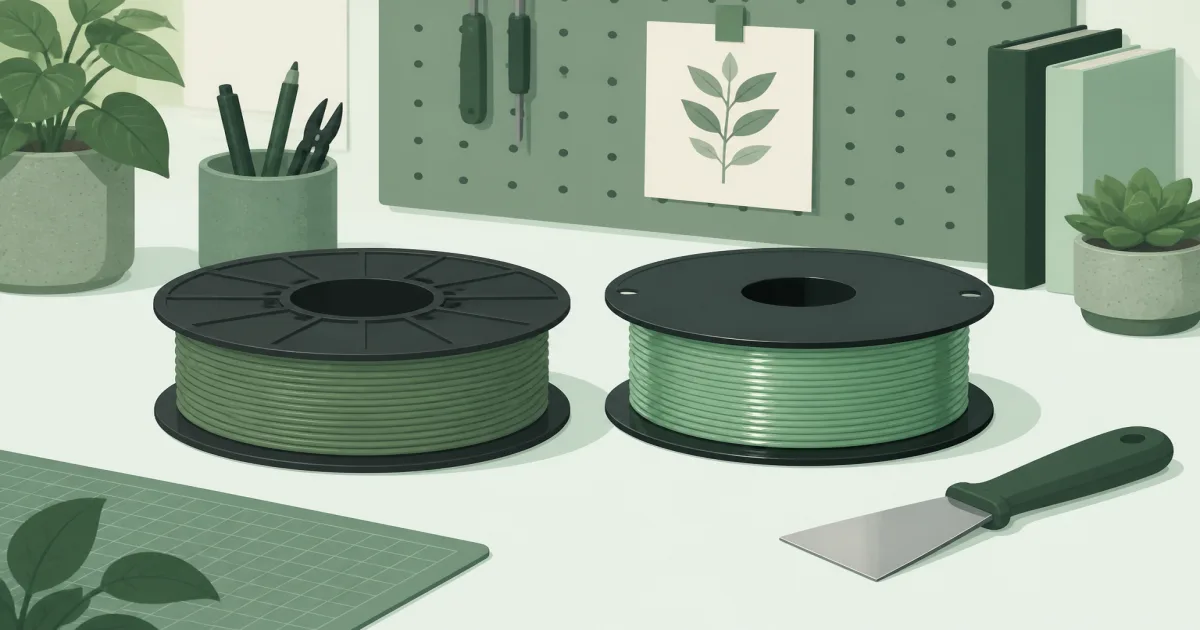
The short answer: Use HATCHBOX PLA for everyday first prints and indoor parts. Step up to OVERTURE PETG when brackets need more toughness. Keep OVERTURE PLA as a value spool when you burn through black and white faster than specialty colors.
Our picks
Filament is where “my printer is broken” stories usually start. A damp spool, a PETG profile on a cold bed, or a mystery silk blend can make a solid machine look cursed. This guide compares real US Amazon options so you match material to the job.
These recommendations are research-based from listing specs and long-running buyer reviews. Pair them with a reliable machine from best 3D printer or the softer entry path in best 3D printer for beginners.
PLA vs PETG at a glance
PLA is the friendly default. It prints at lower temps, usually smells mild, and sticks on many textured PEI sheets with less drama. PETG is tougher and more heat tolerant for light outdoor or garage use, but it wants a warmer bed, dryer storage, and a first layer that is not mashed into glass.
Skip ABS and ASA until you have ventilation and preferably an enclosure. Those materials solve different problems than “my first hook.”
Everyday PLA: Hatchbox
HATCHBOX PLA Filament 1.75mm Black is our everyday pick because the review history is deep and the diameter story is consistent. Beginners get clog-free flow and low odor without hunting exotic profiles. Vacuum sealing with desiccant helps the spool arrive ready to print.
Use it for calibration cubes, cable clips, drawer inserts, and cosplay bits that stay indoors. If a part will sit in a hot car, PLA is the wrong class. Move to PETG or an engineering filament later.
Hatchbox also makes it easy to add a second color without changing brands mid-project. That matters when you are still learning how temperature changes by color batch.
Tough upgrade: Overture PETG
OVERTURE PETG Filament 1.75mm Black is the step when PLA snaps or softens under real use. Buyer reviews that stick around after the first spool call out toughness and tidy winding, which matters if you later feed an AMS-style system.
Print slower on the first layer than your PLA speed. Keep the bed warm enough for adhesion, then control cooling so layers bond. Store the spool sealed. PETG loves humidity, and wet PETG looks like a hardware failure.
Do not jump to PETG because a YouTube short said it is “stronger.” Jump when a PLA part already failed in your hands for the right reason.
Value PLA: Overture
OVERTURE PLA Filament 1.75mm Black covers the value lane when you burn through basic colors. Cardboard spools are easier on some automatic systems, and the dimensional accuracy is good enough for general FDM work.
Use it for bulk black-and-white production once your profile is dialed on Hatchbox or any trusted PLA. If one brand’s black looks off on your nozzle temp, adjust by 5°C before switching materials entirely.
How to store filament so it stays printable
Keep opened spools in a sealed bin with fresh desiccant. A zip bag is fine for a week. A dry box is better for PETG and for humid climates.
Signs you need drying: fuzzy surface, heavy stringing that is new, or popping sounds at the nozzle. Dry before you tear down the hotend. Many “clogged extruder” nights were just wet plastic.
Label the bag with the open date. You will forget which white spool is three months old.
Profiles that prevent false “bad filament” calls
Start with the brand’s temp range, then change one variable at a time. Nozzle first, then bed, then cooling. If you change five settings after one failed Benchy, you will not know what worked.
For PLA, a clean textured PEI sheet and a sensible first-layer height beat glue sticks for most modern printers. For PETG, a light glue layer can help on some plates, but cleanliness still wins.
If you run Bambu or Creality stock profiles, still confirm diameter is 1.75 mm and the spool is not carded as 2.85 mm. That mismatch is rare, but it ends prints fast.
Specialty filaments to postpone
Silk PLA, wood fill, glow, and carbon blends look great in photos. They also hide tuning mistakes and can wear brass nozzles. Print ten successful PLA parts before you buy a glitter spool.
Flexible TPU needs a direct-drive path and slow speeds. It is a second-month project, not a day-one flex.
Buying checklist before you click
- Confirm 1.75 mm for your machine
- Prefer brands with thousands of real ownership reviews
- Check vacuum seal and desiccant in photos
- Match color to a job you will print this week
- Budget a dry box if you live somewhere humid
Cheap no-name filament can work once. It can also waste a weekend. Pay a few dollars more for a spool people keep rebuying.
Color and finish notes that actually matter
Black and white hide layer lines differently. Black shows scratches and dust; white shows stringing. If you are still tuning, print functional parts in a mid-tone gray or a color you like less so you are not emotionally attached to every scar.
Silk and shiny finishes look premium in photos and punish uneven cooling. Save them for display pieces after your basic PLA profile is boringly reliable. Matte PLA can hide lines better for cosplay props, but treat it as a second spool, not a rescue plan for a wet roll.
Bottom line
The best 3D printer filament is the one that matches the part, not the fanciest label. Start with HATCHBOX PLA, keep OVERTURE PLA for volume colors, and graduate to OVERTURE PETG when strength matters more than easy first layers.
Frequently Asked Questions
What is the best 3D printer filament for beginners?
Start with a reputable 1.75 mm PLA such as Hatchbox. It prints cooler, smells less, and forgives small first-layer mistakes better than PETG or ABS.
PLA vs PETG: which should I buy first?
Buy PLA first. Move to PETG when parts need more impact resistance or light outdoor durability and your bed adhesion is already reliable.
Do I need a filament dryer?
Not on day one if spools stay sealed. After a humid week, or whenever PETG starts stringing oddly, a dryer or sealed box with desiccant pays for itself.
Can I put any spool in an AMS?
No. Check spool width, hub size, and cardboard vs plastic. Some brands need adapters. Neat winding matters more once automatic swaps begin.
Why does my filament keep clogging?
Common causes: moisture, wrong nozzle temp, tangled spool, or abrasive specialty filament in a soft brass nozzle. Fix storage and temps before blaming the printer.