PTFE Tube for 3D Printers: When Capricorn Tubing Fixes Feed Drama
A PTFE tube carries filament from the extruder to the hotend on Bowden printers. Capricorn XS tubing cuts friction and play. Replace crushed stock tubes before you blame the nozzle.
By Harper Lin
3Dprintpicks is reader-supported. As an Amazon Associate we earn from qualifying purchases. Learn more.
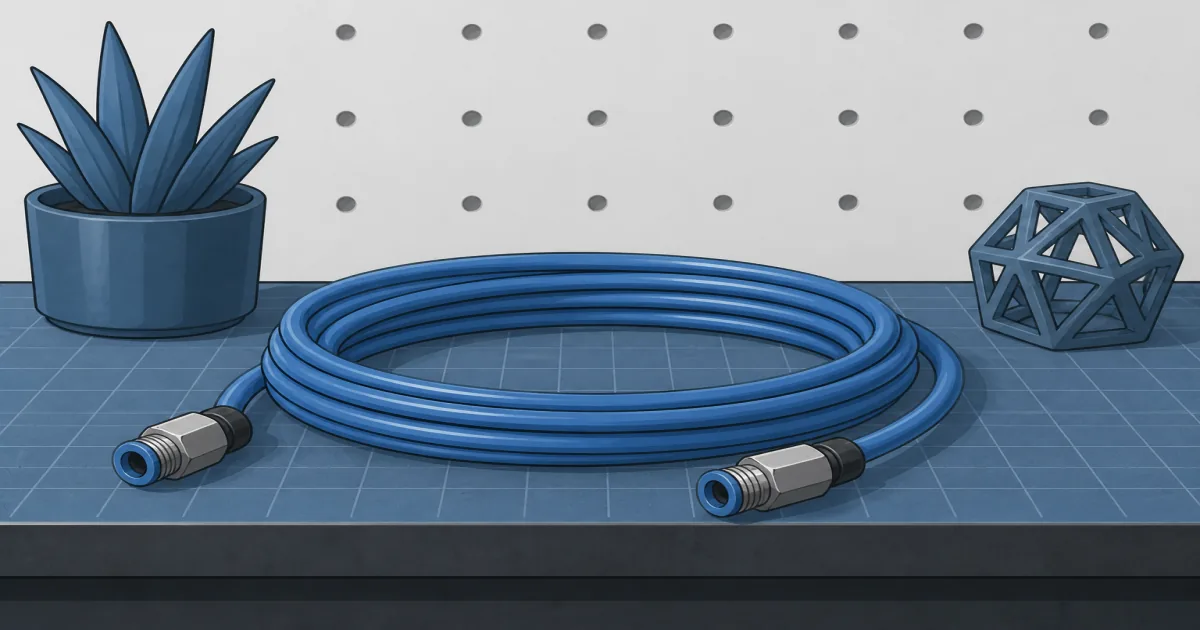
The short answer: Upgrade a tired Bowden path with Capricorn Bowden PTFE Tubing XS Series 1 Meter (paid link) if your fittings are fine. Grab the Capricorn PTFE Tubing Kit with Fittings and Cutter (paid link) when you want a full reseat with square cuts in one sitting.
Our picks
A PTFE tube is the quiet plastic liner that carries filament on Bowden printers. When stock tubing gets ovalized, browned, or too loose, the extruder works harder, retractions get mushy, and flexible filament folds in the path. People buy new nozzles. Half the time the liner was the soft, chewed middle.
If you are still learning the machine, keep a plain beginner printer printing PLA first. This guide is the Bowden refresh you do after the stock tube looks tired.
When a PTFE upgrade is worth it
Replace the tube when:
- The ends look crushed or flared where they meet the couplers
- The inside looks browned near the hotend
- TPU or soft PLA+ buckles in the Bowden path
- Retraction settings that used to work now leave stringy blobs
Skip the upgrade if your printer is direct drive with a short healthy liner and clean nozzle. Capricorn will not fix a clogged orifice or a wet spool.
Setup kit item 1: Capricorn XS tube
Capricorn Bowden PTFE Tubing XS Series 1 Meter (paid link) is the low-friction liner makers reach for when they already own fittings. The tighter inner diameter reduces play so filament does not rattle on a long Bowden run.
Cut only after you know the seated length. Push the tube fully into both couplers, mark, then cut square. A lazy angled cut leaves a tiny gap at the hotend. That gap is how heat creep and partial clogs start.
Measure twice. Leftover tubing that loops around the frame adds drag you did not need.
Setup kit item 2: fittings and cutter kit
Capricorn PTFE Tubing Kit with Fittings and Cutter (paid link) is the one-sitting swap. You get tube, PC4-style fittings, and a cutter so both ends seat flat. Use it when the old fittings are chewed, cracked, or no longer grip the tube.
Confirm thread sizes before you force a fitting. Extruder and hotend sides are not always the same. If a fitting cross-threads, stop. Metal chips in the filament path are worse than a worn tube.
Keep a small tools kit nearby for coupler collets and a spare nozzle wrench while you are in there.
How to swap a Bowden PTFE tube
- Cool the hotend fully
- Unload filament
- Release both couplers and pull the old tube
- Inspect for brown heat damage near the hotend end
- Seat the new tube fully on both sides
- Cut square if the kit includes a cutter
- Reload filament and run a short extrusion test
Do not yank a hot tube. Soft PTFE tears and leaves crumbs in the heat break.
After the swap, print a calibration cube before you chase exotic retraction numbers. Many “Capricorn fixed everything” stories are just a clean, correctly seated liner.
Direct drive vs Bowden, quickly
If you print soft TPU often, a Bowden Capricorn tube is a patch, not a conversion to direct drive. Soft filament still prefers a short path.
Signs your stock tube is done
Pull the old liner and look at the hotend end first. Brown, scorched PTFE means heat crept past where the tube should stop. That end no longer seals cleanly. Replace it even if the middle looks fine.
Squeeze the ends. Ovalized tubing that used to be round will slip in the coupler and back out under pressure. That shows up as random under-extrusion after a few centimeters of print.
Flexible filament is the stress test. If PLA prints fine but TPU buckles in the Bowden path, the liner ID or friction is part of the problem. Capricorn helps. A shorter path helps more.
After the swap: what to tune
Do not copy someone else’s retraction length from a forum post on day one. Start with the printer’s stock Bowden profile. Print a small cube. If stringing remains, dry the filament, then nudge retraction a little. A fresh tube often lets you use less retraction than a crushed stock liner needed.
If extrusion is still thin after a clean tube and a clear nozzle, check the extruder gear for worn teeth and the filament diameter for a cheap off-size roll. The liner is one link in the chain.
Mistakes that waste a good tube
People cut the tube too short, so it backs out of the hotend under pressure. People also leave a loop of slack that catches on the frame. Both look like “random under-extrusion.”
Another miss: upgrading the tube while leaving a partially clogged nozzle. Clear or swap the nozzle in the same maintenance window. Pair with 3D printer maintenance kit habits if the printer has been ignored for months.
A third miss is buying tubing meant for 3 mm filament on a 1.75 mm machine. Match the series to 1.75 mm Capricorn XS style tube. Wrong ID feels smooth and still prints soft and inconsistent.
Bottom line
A PTFE tube refresh is a small Bowden fix with outsized results when the stock liner is crushed or browned. Buy Capricorn Bowden PTFE Tubing XS Series 1 Meter (paid link) for a tube-only upgrade, or the Capricorn PTFE Tubing Kit with Fittings and Cutter (paid link) when you want fittings and square cuts together. Seat both ends fully, cut square, then test extrusion before you rewrite every retraction setting.
Frequently Asked Questions
What does a PTFE tube do on a 3D printer?
On Bowden printers it guides filament from the remote extruder into the hotend. Low-friction tubing reduces drag, skips, and mushy retractions.
Do direct-drive printers need Capricorn tubing?
Usually no for a long Bowden run. Many direct-drive hotends still use a short PTFE liner inside the heat break. Replace that short piece only when it is browned or melted back.
How often should I replace PTFE tubing?
Replace it when the ends look crushed, browned, or flared, or when flexible filament starts buckling in the path. Heat and time age PTFE.
Can PTFE tubing help with TPU?
Yes on Bowden setups. A tight, low-friction tube reduces places for soft filament to fold. Direct drive is still easier for soft TPU. See best TPU filament.
What length of PTFE tube do I need?
Measure your current path end to end, then cut the new tube to match after seating both couplers. Extra length that loops on the frame adds drag.
How do I cut PTFE tubing cleanly?
Use a dedicated tube cutter or a sharp blade against a square guide. A angled cut leaves a gap at the hotend and invites heat creep and clogs.
Will a new tube fix under-extrusion by itself?
Not if the nozzle is clogged, the extruder gear is worn, or the filament is wet. Swap the tube when the liner is the weak link, not as a random first guess. Check 3D printer nozzles too.