Best 3D Printer for ABS: Enclosed Home Printers That Handle Heat Better
ABS asks more from a printer than PLA. Start with an enclosed machine, then treat ventilation, part size, and first layers as part of the purchase.
By Alex Turner
3Dprintpicks is reader-supported. As an Amazon Associate we earn from qualifying purchases. Learn more.
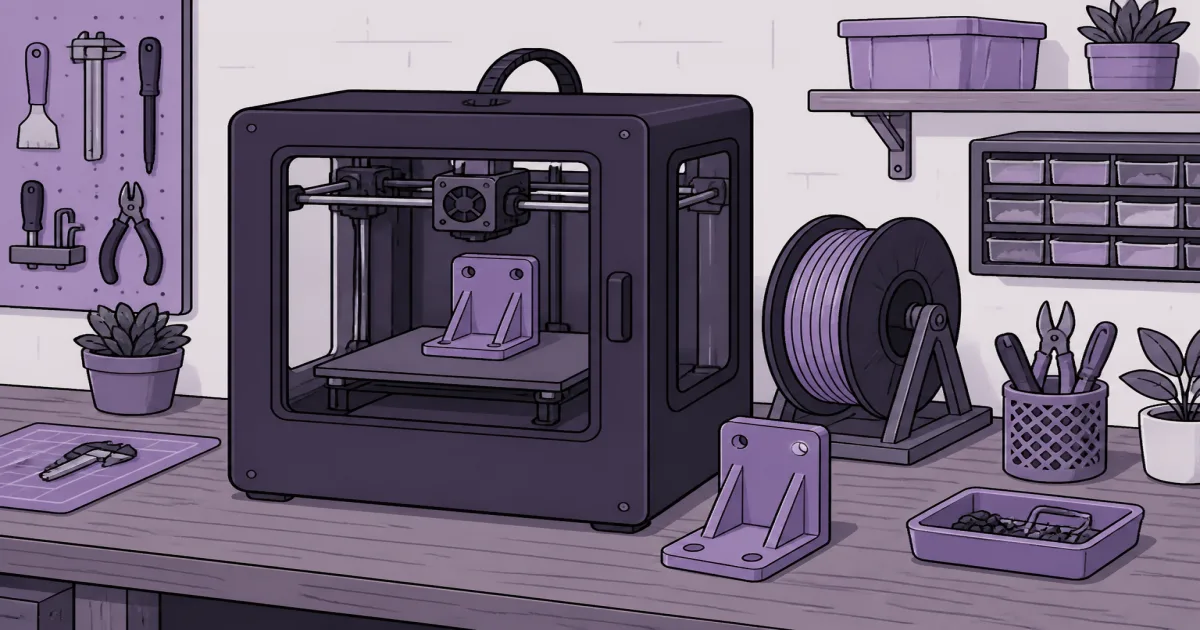
The short answer: The Bambu Lab P1S Combo is the best 3D printer for ABS for most home buyers because its enclosed frame gives ABS a calmer environment than an open-bed machine. It still needs a suitable room, ventilation, and a patient first layer.
Our picks
ABS is useful when you need parts that tolerate more heat and rough use than ordinary PLA. It is also less forgiving. The material shrinks while cooling, so a cold draft across a large part can pull corners off the bed or split layers. The printer choice matters, but the room and setup matter with it.
Our pick is research-based from the live US Amazon listing, published specifications, and owner review evidence. The P1S listing was live and above the four-star rating floor when checked. Check current price, fit, and room requirements before buying.
Choose an enclosed printer first
An enclosure helps hold warmer air around the print and blocks sudden room drafts. That is why the Bambu Lab P1S Combo is the better starting point for ABS than an open-frame printer. Its frame is contained, its motion system is built for home use, and its software path is easier to live with than a pile of upgrades.
An enclosure is not a promise that every ABS model will succeed. Large flat parts still shrink. A dusty plate, damp filament, or a bad first layer can still end a job early. Start with a small bracket or box before attempting a large panel.
Read our best enclosed 3D printer guide if you are still deciding between enclosed machines. The guide covers the broader desk-space and material tradeoffs.
Set up the room honestly
ABS is not the material to print anywhere just because the printer fits. Keep the printer on a clear stable bench, away from sleeping areas and household clutter. Follow the printer and filament maker’s guidance about ventilation. Do not run unfamiliar ABS jobs overnight.
Keep the room temperature stable. A cold window, ceiling vent, or exterior door can undo the advantage of an enclosure. If you own an open-frame printer and only need occasional small ABS parts, our 3D printer enclosure guide explains what a tent can and cannot do.
Build habits that stop warping
Dry filament and a clean bed are the unglamorous basics. Use the material profile recommended for your printer, watch the first layer, and use a brim when the part has wide sharp corners. Make one change at a time. Raising every temperature, adding glue, and closing every panel all at once makes it hard to know what solved the problem.
ABS is not a reason to abandon PLA. Use PLA for ordinary organizers, toys, and easy indoor parts. Move to ABS when the part needs its heat resistance or toughness. That keeps the printer and the room from doing more work than the project needs.
Start with practical parts
ABS rewards realistic first projects. Print a small bracket, cover, or tool holder before a wide tray or tall cosplay shell. Small parts let you confirm bed adhesion, material profile, and enclosure temperature without wasting a whole spool. If corners start to lift, clean the plate, reduce drafts, and use a brim before changing every setting in the slicer.
For parts that live outdoors or in a hot car, compare the material requirements instead of assuming every ABS spool is the same. Good printing is usually a chain of sensible choices, not one magic temperature number.
Bottom line
For ABS, buy an enclosed home printer before you buy accessories. The Bambu Lab P1S Combo gives most home users a practical enclosed starting point, but successful ABS still requires a stable room, sensible ventilation, dry material, and attention to the first layer.
Frequently Asked Questions
Can an open 3D printer print ABS?
It can for small jobs, but drafts and heat loss make warping much more likely.
Why does ABS need an enclosure?
ABS shrinks as it cools. Still, warmer air around the part reduces abrupt cooling and lifted corners.
Can I print ABS in a bedroom?
Consider ventilation and household safety carefully. Do not treat a bedroom as automatically suitable.
Is PLA easier than ABS?
Yes. PLA is usually the easier first material for home printing.
Do I need a hardened nozzle for ABS?
Plain ABS generally does not require one. Filled ABS can require a wear-resistant nozzle.
What causes ABS corners to lift?
Cooling drafts, poor bed preparation, and large parts that shrink as they cool are common causes.