Best 3D Printer for Cosplay: Choose Bed Size Before Speed
A cosplay printer needs dependable large parts more than a flashy speed claim. Pick an enclosed P1S for material flexibility or an A1 Combo for easier PLA color work.
By Alex Turner
3Dprintpicks is reader-supported. As an Amazon Associate we earn from qualifying purchases. Learn more.
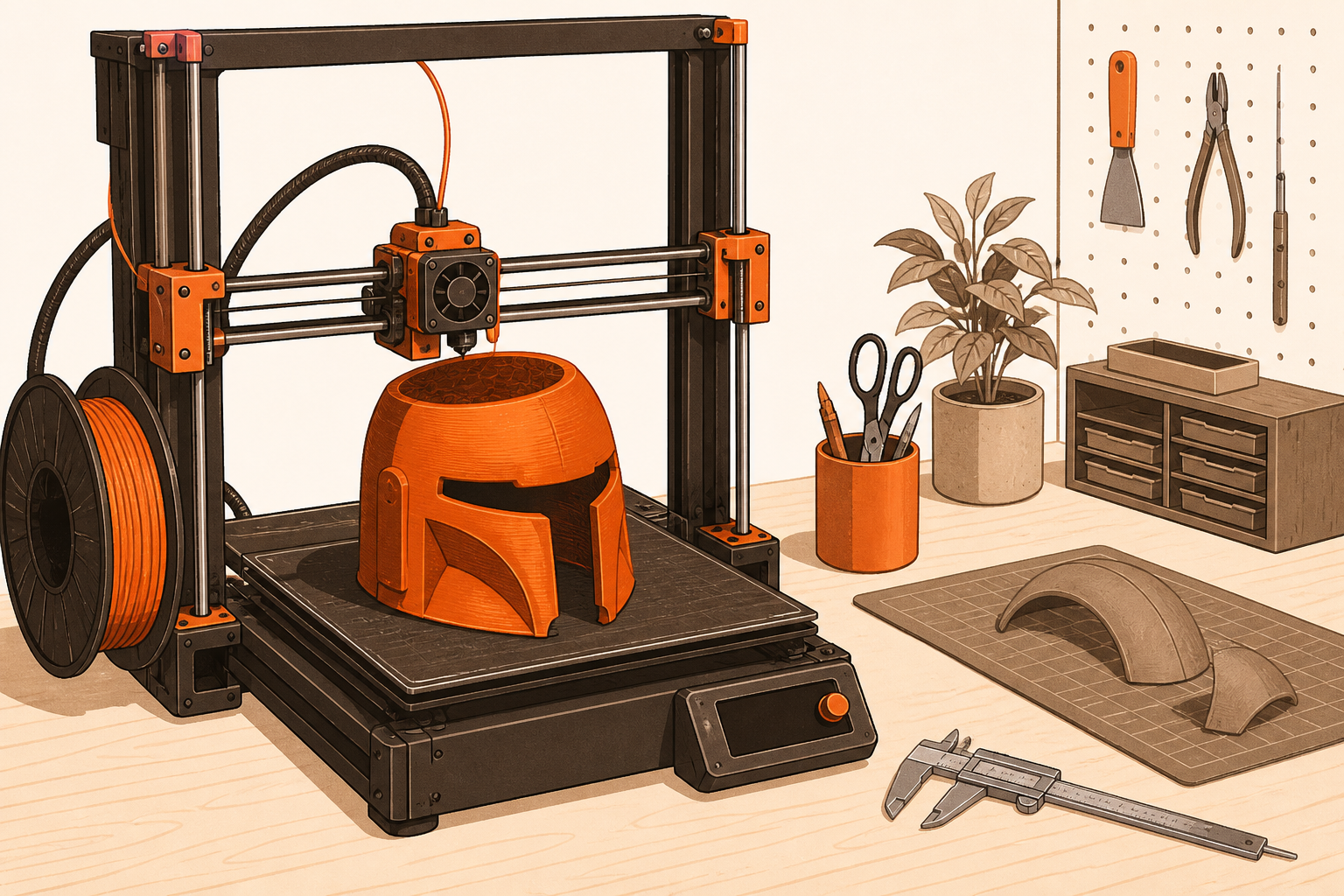
The short answer: Choose the Bambu Lab P1S Combo if you want dependable costume sections and the option to grow into warmer materials. The Bambu Lab A1 Combo is the friendlier buy for mostly PLA props and multi-color details.
Our picks
This reader-supported guide uses Amazon links. As an Amazon Associate we earn from qualifying purchases. Learn more.
The best 3D printer for cosplay is not necessarily the largest one on the internet. Most home makers get farther with a reliable mid-size FDM printer, a sensible way to split models, and patience for sanding than with a giant machine that is hard to tune. Bed size matters, but so do first layers and long-print reliability.
The products here are research-based recommendations from live US Amazon listings, specifications, and useful buyer review patterns. Both listings are live, rated above four stars, and have review evidence from owners who discuss real print use.
Measure the prop before you buy the printer
Open the model in your slicer and look at its biggest flat dimension. A 256 mm square bed handles armor panels, masks, weapons, and many helmet sections. It does not magically fit a full Mandalorian-style helmet in one piece.
Splitting a model is normal cosplay work. Put seams along an edge, a raised trim line, or a place hidden by another part. Add alignment pins, leave a little sanding room, then glue and reinforce the inside. A clean split is better than trying to force an oversized model onto the bed.
For props that live in a hot car or outdoors, material choice matters too. PLA is easy to print and finish but softens in heat. PETG is tougher. ASA needs more careful printing. Our best 3D printer filament guide explains the basic tradeoffs.
Best all-around pick: Bambu Lab P1S Combo
The Bambu Lab P1S Combo is the best fit for a maker who wants costume parts without turning every long print into a troubleshooting project. Its enclosure helps protect large pieces from drafts and gives you room to try materials that are less forgiving than PLA.
The built-in AMS is useful for stripes, emblems, and details, although it will not replace painting for a large armor set. The more valuable feature is repeatability. Once you have a part profile that works, you can print a left and right piece without starting from scratch each time.
The P1S still has a 256 mm class bed. Plan to split big helmets. Buy it for dependable sections, not because you expect one-piece movie armor. For full size and beginner setup details, see best 3D printer.
Choose the A1 Combo for PLA color work
The Bambu Lab A1 Combo is a good alternative when your plan is mostly PLA and PETG. It offers automatic calibration and an AMS lite for multi-color printing without the higher enclosure cost.
This is the better choice for a maker printing badges, small accessories, and bright props at a regular home desk. Skip it if ASA or ABS is a firm goal. Those materials make more sense in an enclosed machine with a suitable ventilation plan.
Do not confuse a color system with a shortcut to finished cosplay. Color changes save paint on some small parts, but sanding, primer, filler, and assembly still do most of the work on a large prop.
Make long costume prints less risky
Print a small corner or a scaled test before sending a 30-hour helmet section. It can reveal support scars, weak seams, and a bad orientation while the waste is still small. Keep the first layer slow and clean. A fancy high-speed profile cannot rescue a part that starts lifting on hour two.
Use enough walls for sanding. Thin costume shells flex while you fill seams and can crack at the glue line. For wearable parts, add extra perimeters around strap points and attachment holes. That small material cost is cheaper than reprinting the whole piece.
An enclosure can reduce drafts around open printers, but it is not a substitute for safety. Read our 3D printer enclosure guide before putting a tent around a machine that was not designed for hot materials.
Bottom line
The Bambu Lab P1S Combo is the better 3D printer for cosplay when you want reliable sections, an enclosure, and room to learn materials beyond PLA. Get the Bambu Lab A1 Combo when you mainly want easy PLA props and multi-color accents. In either case, expect to split large helmets, reinforce seams, and spend time finishing. That is normal cosplay, not a printer failure.
Frequently Asked Questions
What size 3D printer do I need for cosplay?
A 256 mm bed handles many props and helmet sections. Large full helmets still need to be split and glued.
Should I use PLA or PETG for cosplay?
PLA is easy to sand and good for indoor props. PETG is tougher but takes more tuning. Use ASA only with an appropriate enclosure and ventilation.
Can I print a helmet in one piece?
Only on a large-format printer. Most home machines need a helmet cut into sections, which is normal.
Is a fast printer better for costumes?
Reliable layers matter more. A fast failed print is still a failed print, especially after two days of material.