Best PLA Filament: Reliable Spools for First Layers and Everyday Parts
The best PLA filament is the spool that prints on stock settings without drama. Hatchbox is the safe daily roll. PolyTerra hides layer lines. PLA+ handles knocks better.
By Harper Lin
3Dprintpicks is reader-supported. As an Amazon Associate we earn from qualifying purchases. Learn more.
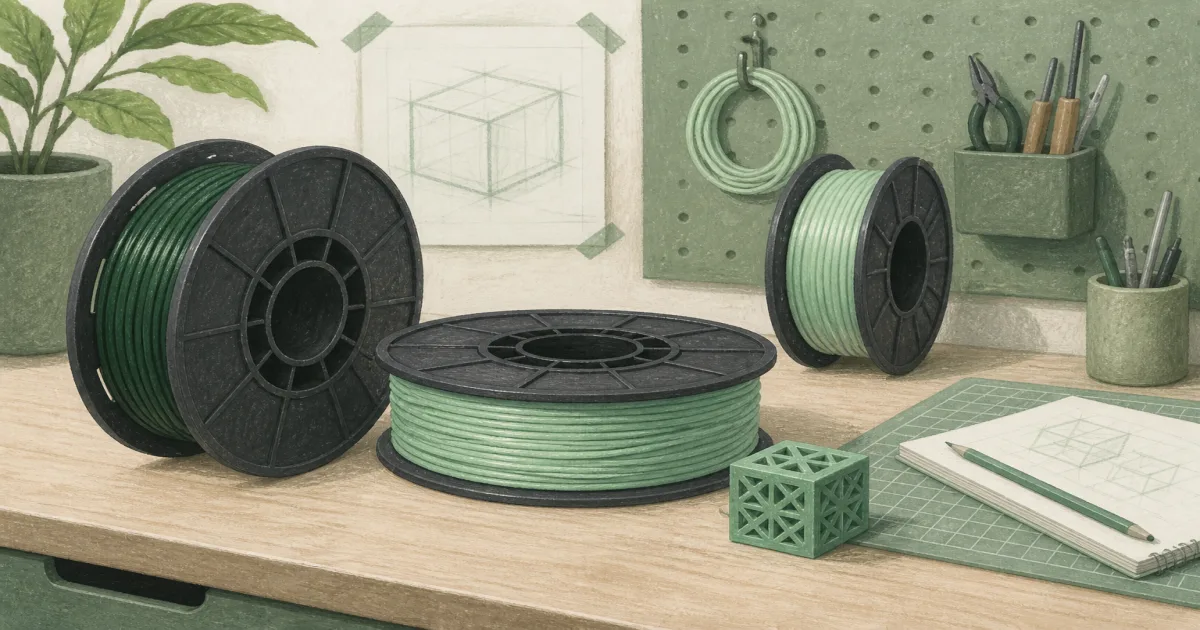
The short answer: Buy HATCHBOX PLA Filament 1.75mm Black for everyday prints. Choose Polymaker PolyTerra PLA Charcoal Black when you want a matte look, or eSUN PLA+ Filament 1.75mm Black when indoor parts need a little more toughness.
Our picks
The best PLA filament is the one that finishes a first layer without a weekend of temperature towers. PLA is the friendly default for home FDM: cooler temps, mild smell, easy adhesion on many sheets. The brand still matters. Mystery silk blends and damp bargain spools are how people decide “the printer is broken.”
These picks are research-based from live US Amazon listings, specs, and long-running buyer reviews. We have not tensile-tested every colorway. For PLA versus PETG as a material choice, use PLA vs PETG. This page stays inside PLA.
What “good PLA” actually means
You want diameter that stays near 1.75 mm, winding that does not tangle on hour six, and a temperature window that matches common profiles. You also want reviews from people who printed parts, not only “packaging looked nice.”
PLA still hates heat. A black indoor organizer is a great PLA job. A phone mount on a summer dashboard is not. Do not buy PLA+ hoping it becomes ABS.
Store open spools sealed. PLA is less thirsty than PETG, but a humid week still adds stringing.
Top pick: Hatchbox PLA
HATCHBOX PLA Filament 1.75mm Black is the daily spool we keep pointing at. It is the same reliable 1.75 mm black roll used across our filament guides because the US listing has a huge review history and a stable 4.7-star pattern from people who actually print, not empty five-star fluff.
Load it. Use the stock PLA profile on a machine from best 3D printer for beginners. Print a cube. If that fails, look at leveling and Z-offset before you hop to exotic blends.
Skip Hatchbox only if you already know you want matte cosmetics or extra toughness. It is not a specialty filament. That is the point.
Matte pick: PolyTerra
Polymaker PolyTerra PLA Charcoal Black is the display spool. The matte finish hides layer lines on figurines and props. The US listing sits around 4.4 stars with thousands of reviews. Cardboard spools and sealed bags are the usual Polymaker packaging story.
Print it a little like standard PLA, then check the brand card. Matte PLA can look “unfinished” if you expected a glossy hatchbox sheen. That is the feature. If you want shiny, stay on Hatchbox.
Supports often break away cleaner on PolyTerra than on glossy PLA. That helps miniatures more than brackets.
Tougher pick: eSUN PLA+
eSUN PLA+ Filament 1.75mm Black is the indoor functional step. Clips, bins, and parts that get dropped survive better for many people than basic PLA, without the drying homework PETG demands. The US listing is 4.3 stars with a very large review count, which is enough history to trust the pattern.
It is still PLA-family on heat. A garage shelf in July can sag a thin PLA+ part. For real outdoor or hot-car duty, you leave this page and look at PETG or ASA later.
If PLA+ still cracks, that is a geometry and wall-count problem as often as a brand problem. Add walls before you buy a fourth spool.
How to pick among the three
Do not buy all three on day one. Hatchbox teaches you the machine. The other two are upgrades with a reason.
For a wider PLA-versus-PETG shopping list, see best 3D printer filament.
Print settings that usually work
Start with the printer’s PLA profile. Typical home ranges sit near 190 to 220 C on the nozzle and 50 to 60 C on the bed. Then change one thing at a time.
If the first layer is shiny and mashed, raise Z a hair. If it is stringy, dry the spool and drop temp. If corners lift, wash the bed and check drafts. A glue stick is optional on textured PEI. See 3D printer glue stick only if the plate is glass or still slick after a wash.
Storage and moisture
Keep the bag and desiccant. Clip the loose end in the spool hole. If the roll sat open through a humid week and prints get fuzzy, dry it. PLA is easier than PETG. It is not immortal.
A cheap dry box beats a decorative open rack. Humidity does not care that the spool looked premium in the product photo.
Colors, silk, and what to skip at first
Black and white teach you the machine. Silk and rainbow blends hide problems and add jams. Buy those after Hatchbox prints look clean for a week.
Cardboard PolyTerra spools often need an AMS adapter. Check hub size before you assume it drops in. Plastic Hatchbox and eSUN spools are the easier AMS path for many desks.
If two colors of the same brand print at different temps, that is normal. Change temperature, not brands, on the second roll.
Bottom line
The best PLA filament for most home desks is HATCHBOX PLA Filament 1.75mm Black. Move to Polymaker PolyTerra PLA Charcoal Black for matte display parts, or eSUN PLA+ Filament 1.75mm Black for tougher indoor prints. Learn one machine on Hatchbox before you collect a rainbow you will not finish.
Frequently Asked Questions
HATCHBOX PLA Filament 1.75mm Black
is the safest first spool. It prints on stock profiles on most 1.75 mm machines and has a long public review history.
Is PLA+ better than regular PLA?
PLA+ is usually a bit tougher and less brittle. It is still PLA. It will not match PETG for heat or outdoor abuse. Use it for indoor parts that get handled.
Does PLA need a heated bed?
Most modern machines print PLA on a warm bed around 50 to 60 C. Some textured sheets will hold PLA on a cooler bed. Follow your printer profile first.
Why does my PLA string?
Wet filament, high temp, or retraction that was copied from PETG. Dry the spool, drop temperature 5 C, then tune retraction. See filament dryer.
Can I use these spools in an AMS?
Many 1 kg plastic or cardboard spools fit with adapters. Check width and hub size. Neat winding matters once automatic swaps start.