Best Filament Storage (2026): Keep Spools Dry Between Prints
Open spools drink humidity. These three storage setups keep filament printable between jobs without turning your desk into a warehouse.
By Harper Lin
3Dprintpicks is reader-supported. As an Amazon Associate we earn from qualifying purchases. Learn more.
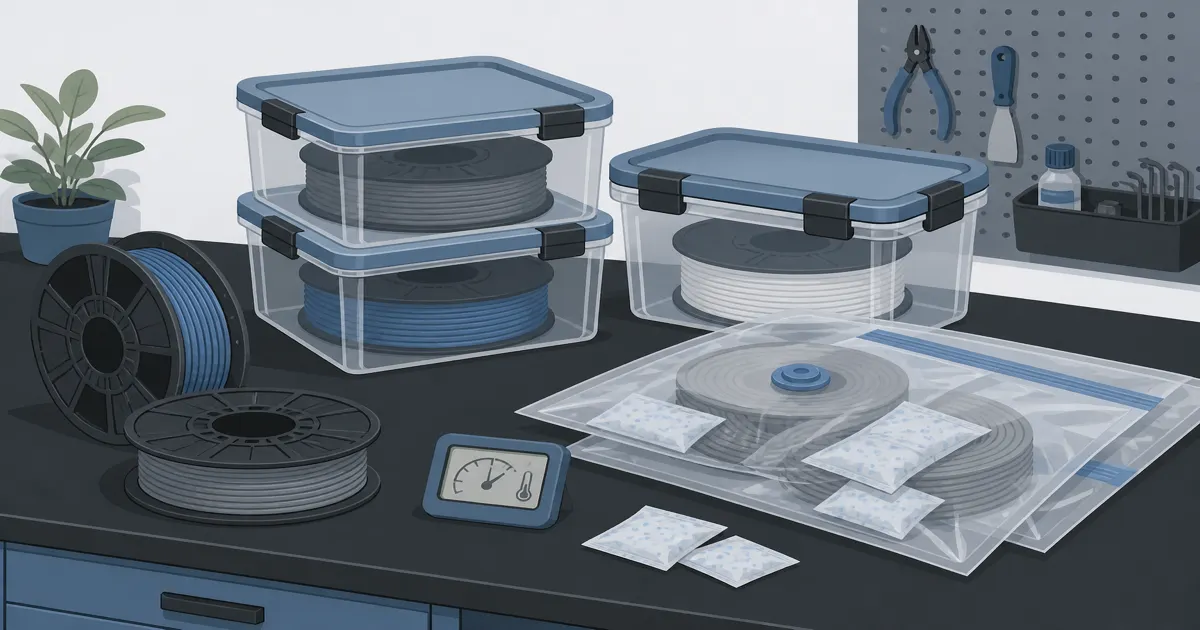
The short answer: Buy the Polymaker PolyDryer Filament Dryer & Storage Box for the spool you print most, add a Polymaker PolyDryer Filament Storage Box for the next roll, and park everything else in the 20 PCS Filament Vacuum Storage Bags Kit. Storage is about humidity control, not pretty shelves.
Our picks
Wet filament looks like a broken printer. Layers go soft. Stringing shows up overnight. PETG pops and fails mid-print. The fix is usually boring: keep sealed spools sealed, dry what got wet, and stop leaving open rolls on the desk.
These picks are research-based from live US Amazon listings. We checked ratings, review volume, and that each product page loads. Confirm the current kit contents and price before you buy. If you already know the spool is soaked, start with a filament dryer, then store it right.
How we scored filament storage
We wanted gear that matches how people actually print at home:
- Live US Amazon listing at 4.0 stars or higher
- Enough real buyer reviews to trust the pattern
- A clear job: dry-and-store, sealed spare box, or multi-spool bags
- A path to print without leaving the roll open all week
We skipped bag kits under 4.0 stars even when they looked cheap. A leaky bag is not storage. It is delay.
Top pick: Polymaker PolyDryer
The Polymaker PolyDryer Filament Dryer & Storage Box is the one-system answer. Heat to dry, seal to store, feed to print without cracking the lid every time you start a job.
That sealed feed path matters more than the marketing. Opening a box for every print dumps humid air back in. Feeding through the seal keeps PETG, nylon, and fussy PLA closer to printable between sessions.
It costs more than bags. Worth it when you live somewhere damp, print technical materials, or hate babysitting hygrometers on five different containers. One active spool in the PolyDryer covers most weeks for a single-printer desk.
Best sealed box: Polymaker storage box
The Polymaker PolyDryer Filament Storage Box is the spare sealed chamber. No heater. Airtight body, hygrometer, and a feed path so a second color or backup roll stays closed until you need it.
Use this when you already own a dryer (or a PolyDryer unit) and just need capacity. Dry the wet roll first. Then park it here so it does not re-absorb moisture on the shelf.
It is the clean upgrade path: one heated unit, two or three sealed boxes, labels on the lids. That beats a pile of half-open bags with mystery humidity.
Best budget: vacuum storage bags
The 20 PCS Filament Vacuum Storage Bags Kit is for the rest of the shelf. Twenty bags, desiccants, pump, and clips so you can seal a rainbow of PLA colors without buying twenty hard boxes.
Bags win on cost per spool. They lose on durability and heat. Expect to replace worn seals over time. Never treat vacuum bags as a dryer. If the filament already stringed and popped, dry it first, then bag it.
This kit clears our rating floor and has enough reviews to show real ownership notes, not a brand-new stub listing.
Comparison: which storage for which desk
Most home desks end up mixed. One hard sealed system for the active materials. Bags for the archive. That is normal, not a failure.
What good filament storage actually does
Storage does three jobs:
- Blocks room humidity after you open the factory bag
- Lets you see when desiccant is spent (hygrometer or soaked packs)
- Lets you print without leaving the spool open for days
It does not fix a clogged nozzle, a warped bed, or the wrong temperature. If PLA still fails after sealed storage, check the machine and the profile before buying another box. For material choice basics, see best 3D printer filament and best PLA filament.
Setup that lasts more than a week
- Dry any spool that already stringed or popped
- Load the weekly materials into the PolyDryer or sealed box
- Vacuum-bag the rest with fresh desiccant
- Write the open date on painter’s tape
- Swap desiccant when the hygrometer climbs or packs feel soft
Keep cardboard spools out of aggressive heat. Follow the dryer brand card. Storage boxes are safer for long holds than leaving rolls under a lamp “just for a bit.”
Common mistakes
Buying only bags, then printing PETG all summer with the bag open beside the printer. Or buying three heated dryers and never labeling which roll is which. Or trusting a sealed look while the hygrometer sits at 60%.
Also skip “mystery Amazon’s Choice” bags under 4.0 stars. We rejected those during research. Rating floor exists for a reason.
Bottom line
If you want one buy that covers dry, store, and print, take the Polymaker PolyDryer Filament Dryer & Storage Box. Add the Polymaker PolyDryer Filament Storage Box when a second roll needs the same sealed habit. Use the 20 PCS Filament Vacuum Storage Bags Kit for everything you do not touch this week.
Keep the active spool sealed. Dry what got wet. Bag the archive. That is the whole game.
Frequently Asked Questions
What is the best filament storage for most home printers?
Start with the Polymaker PolyDryer if you print in a humid room or run PETG and nylon often. Use vacuum bags for the rest of the shelf.
Do I need a filament dryer and storage?
Storage keeps dry filament dry. A heated dryer recovers wet filament. Many people need both. See our filament dryer guide for heated boxes.
Is a zipper bag with desiccant enough for PLA?
For short gaps between prints, often yes. For weeks on an open shelf in a damp climate, use a sealed box or vacuum bag.
Can I print from a sealed storage box?
Yes on the Polymaker boxes. Feed filament out the sealed path so you do not open the lid every job.
How many spools should I keep in hard boxes?
Keep the materials you print weekly in hard sealed boxes. Vacuum-bag the colors and leftovers you touch once a month.