How to Dry Filament at Home Before Stringing Ruins the Print
Dry filament when you hear popping or see fuzzy stringing. A heated dryer box beats hoping a sealed bag will fix a spool that already soaked up moisture.
By Alex Turner
3Dprintpicks is reader-supported. As an Amazon Associate we earn from qualifying purchases. Learn more.
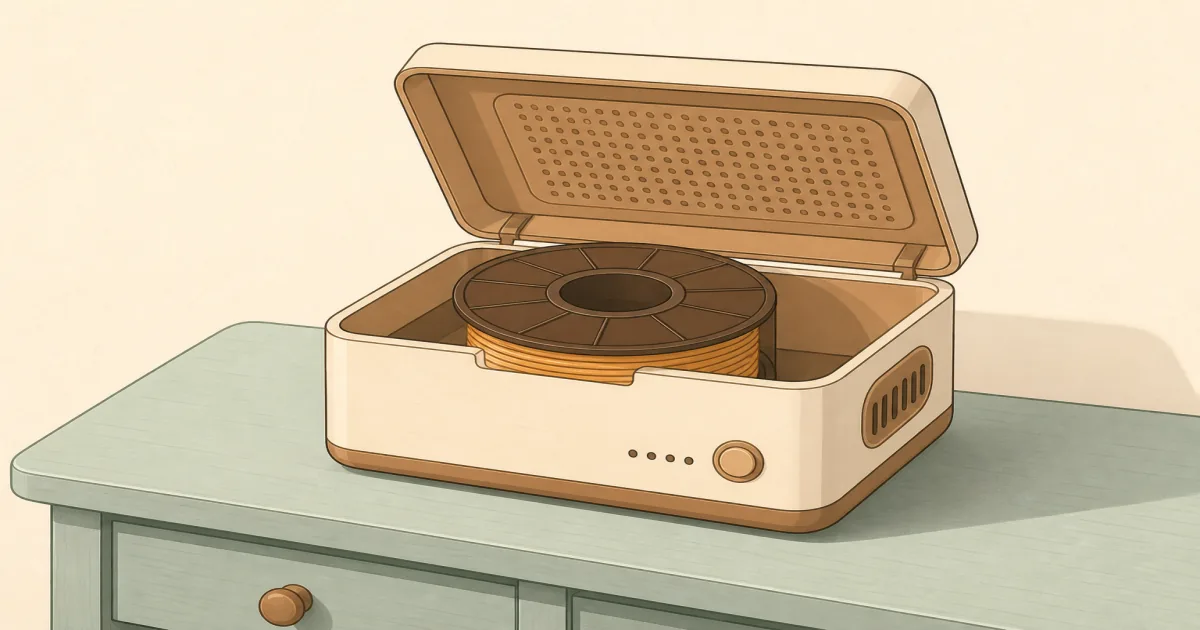
The short answer: Dry filament in a heated box like the SUNLU Official Filament Dryer S1 Plus (paid link) for one everyday spool, or step up to the Creality Space Pi Filament Dryer Plus (paid link) when two open rolls need heat. Then store sealed so the spool does not drink the room again.
Our picks
Wet filament makes a solid printer look broken. You get popcorn noises in the nozzle, fuzzy stringing, weak layers, and mystery underextrusion that vanishes on a fresh vacuum-packed roll. Before you retune every slicer setting, dry the material you already own.
Filament buying and comparisons live in our filament hub. If you want the product shortlist first, read the best filament dryer guide. This page is the process: when to dry, how long to run, and what to do after.
Spot wet filament before you blame the printer
Listen for soft popping from the hotend. Look for cloudy stringing, blistered surfaces, and layer bonds that feel weak on a material that usually prints clean. PETG, nylon, and TPU soak moisture faster than basic PLA, but PLA still goes soft after a humid week on an open shelf.
If the room sits above about 50% relative humidity for days, treat drying as part of printing. Open spools on a bookshelf are not “stored.” They are waiting to misbehave.
Use a heated dryer, not wishful sealing
A sealed bag with spent desiccant slows more moisture. It does not reliably dry a spool that is already wet. Heated dryers pull water out of the plastic so the hotend stops turning it into steam.
Put the spool in the SUNLU Official Filament Dryer S1 Plus (paid link), set temperature and time from the filament card and the dryer presets, and let the cycle finish. Prefer dry-while-print if the box has a feed path. That keeps the active roll from reabsorbing humidity during a long job.
Choose the Creality Space Pi Filament Dryer Plus (paid link) when two open spools are normal or you want a higher heat ceiling for thirstier materials. Dual chambers matter more in humid basements than in dry climates.
Match temperature to the material
PLA usually wants a milder cycle than PETG. Nylon and many TPU blends want hotter, longer runs. Follow the filament maker's card. Do not guess and cook a cardboard spool until it softens or scorches.
Write down what worked for each brand. Color and blend changes matter more than internet one-size charts. If a spool still pops after one cycle, run another rather than jumping nozzle temperature twenty degrees.
Store dry filament so the job sticks
After drying, either print from the dryer or move the spool into a sealed container with fresh desiccant. Our filament storage guide covers boxes and vacuum bags. Leaving a dried roll on the open printer for a week undoes the work.
Pair drying habits with material choice in best 3D printer filament and the tradeoffs in PLA vs PETG. Thirsty specialty rolls like TPU deserve a dryer from the first open bag.
A practical drying order for a busy desk
- Seal fresh spools the day you open them if you will not finish the roll this week.
- When a print pops or strings after sitting out, dry that spool before you rewrite the slicer profile.
- Print from the dryer when you can so the roll stays warm and dry during long jobs.
- Move finished-for-now rolls into sealed storage with fresh desiccant.
- Label lids with material and the last dry date. Mystery spools waste evenings.
That order beats buying three dryers and still leaving PETG on the bench overnight.
Materials that need more attention
PLA: Often fine from a sealed bag. Dry after humid weeks, long open-shelf storage, or when you hear soft pops.
PETG: Drinks moisture faster in many homes. If edges fuzzy and seams weak, dry before you chase temperature towers.
TPU and nylon: Plan on drying. Keep them sealed when idle. See best TPU filament if flexible prints are your goal.
Filled and specialty blends: Wood, glow, and some glitter mixes can behave worse when damp. Dry first, then judge the filament.
Mistakes that waste a dryer cycle
Running a cardboard spool at a temperature meant for nylon until the flanges soften. Opening the dryer every twenty minutes “to check.” Trusting a vacuum bag alone to fix a spool that already stringed for three prints. Blaming the printer for wet filament after one failed cube. Skipping storage so a perfect dry cycle lasts one humid afternoon.
A dryer is a tool. The habit is what keeps prints predictable.
Kitchen oven notes (and why most people skip them)
Some makers dry spools in a kitchen oven on the lowest verified setting. It can work if you confirm the real temperature with an oven thermometer and stay within the filament card. It can also warp cardboard, scorch plastic, or surprise you with a hotter spot than the dial claims.
If you try it, never leave the oven unattended, never chase nylon heat on a cardboard spool you care about, and move the roll into sealed storage as soon as it cools enough to handle. For most home desks, a dedicated dryer is cheaper than one ruined spool and a tense evening.
Food ovens also share air with dinner. Keep filament drying and food prep as separate jobs when you can.
Bottom line
How to dry filament is mostly patience and heat control. Start with the SUNLU Official Filament Dryer S1 Plus (paid link) for one daily spool. Move to the Creality Space Pi Filament Dryer Plus (paid link) when two open rolls need drying. Seal what you are not printing so the next job does not inherit last week's humidity.
Frequently Asked Questions
How do I dry filament at home?
Use a heated filament dryer with the filament brand's temperature guidance, run a full cycle, then print from the box or seal the spool afterward.
Do I need to dry PLA?
Not on day one from a sealed bag. After a humid week open on the shelf, PLA can pop and string like wetter materials.
Can I dry filament in a kitchen oven?
Only if you can hold a low, verified temperature and you accept the fire and warping risks. A dedicated dryer is safer for cardboard spools.
How long should I dry a spool?
Follow the dryer preset and filament card. Many PLA cycles are a few hours. Nylon and TPU often need longer and hotter runs.
Is desiccant storage enough?
Sealed boxes help after drying. They do not fully rehydrate a soaked spool the way a heated cycle does. See filament storage.
Can I print while drying?
Yes on dryers with a feed path. Keep the spool warm and dry during the job so it does not reabsorb room moisture mid-print.