Matte PLA Filament: Hide Layer Lines Without Paint
Matte PLA filament flattens shine and softens layer lines on figurines and props. Start with PolyTerra charcoal, then add Overture matte white for primed-look models.
By Harper Lin
3Dprintpicks is reader-supported. As an Amazon Associate we earn from qualifying purchases. Learn more.
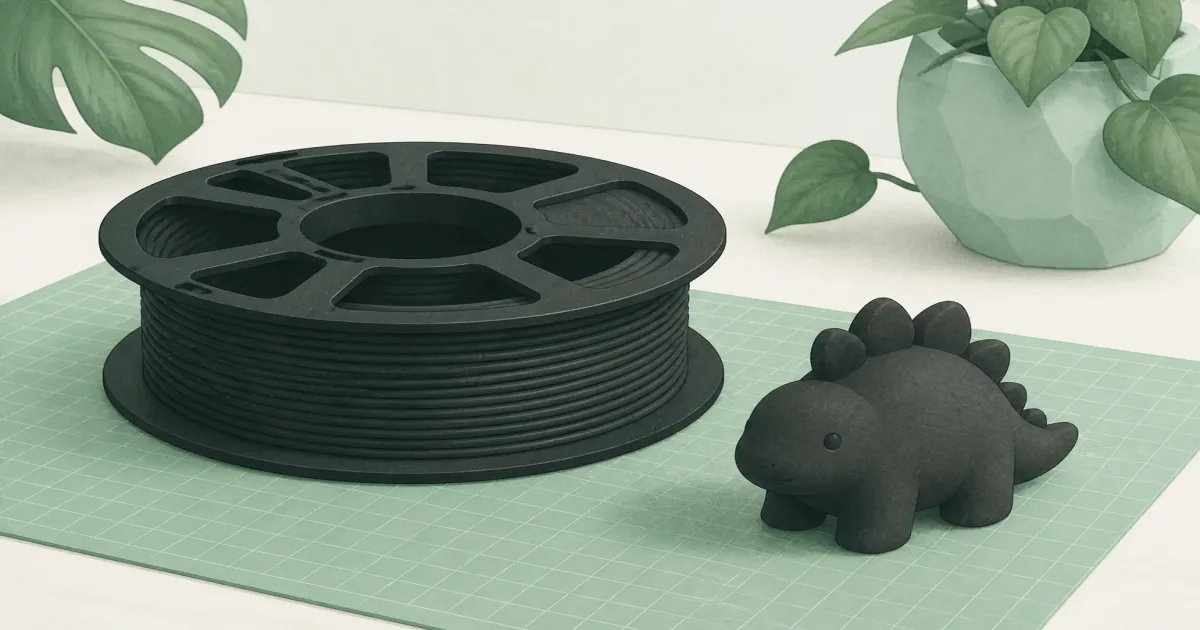
The short answer: Buy Polymaker PolyTerra PLA Charcoal Black (paid link) when you want a frosted charcoal look that softens layer lines. Choose Overture Matte White (paid link) when models should look primed instead of shiny.
Our picks
Matte PLA filament is for prints that should look finished without gloss. The surface scatters light. Layer lines fade. People assume you primed the part.
It is still PLA. Desk props and figurines are the sweet spot. Structural outdoor parts belong elsewhere. If first layers are still a fight, stay on ordinary PLA from best PLA filament until the machine is boringly reliable.
How matte PLA behaves
Expect a chalkier skin than glossy PLA. That is the point. Over-extrusion still shows as ridges. Under-extrusion still shows as scars. Matte hides a little, not bad tuning.
Supports often release cleaner on frosted mixes, which helps miniature bases more than thick brackets.
Top pick: PolyTerra charcoal
Polymaker PolyTerra PLA Charcoal Black (paid link) is the display spool. Charcoal matte softens walls on props and figurines. Cardboard spools are common; AMS users may need an adapter.
Use it when the part is meant to be seen up close. Skip it when you need PETG toughness.
Best light matte: Overture white
OVERTURE Matte PLA Filament 1.75mm Matte White (paid link) reads like a primed miniature. Architectural models and light-colored props benefit most. Purge dark leftovers before you trust the first white walls.
Keep the same 0.4 mm brass habits you use for normal PLA. Matte does not excuse a worn nozzle.
Matte vs silk vs standard PLA
Do not buy every finish at once. One matte spool teaches more than a rainbow you never open.
When matte is the wrong buy
Skip matte if you still fight first-layer adhesion every night. Matte will not fix a dirty plate or a warped bed. Skip it if the part needs outdoor UV toughness or high heat. Skip it if you planned a high-gloss cosplay finish. In that case silk or paint on standard PLA is the clearer path.
Matte also shows fingerprints and grease differently than gloss. Handle light colors with clean gloves if you care about photos.
Tuning and storage for frosted walls
Use a clean 0.4 mm brass nozzle. A worn tip makes ridges that matte cannot hide. Start near normal PLA temperatures. If the surface looks too shiny, try a touch more cooling or a slightly lower outer-wall temp. If it looks chalky and weak, reduce cooling and check for under-extrusion.
Dry storage still matters. A frosted spool that drank humidity prints fuzzy and stringy. Seal the bag. Dry it when popping starts. See filament dryer when moisture is the real problem.
Supports and brims should still be intentional. Matte can release supports cleaner, but large contact scars remain scars. Orient display faces away from dense support forests when you can.
Project ideas that earn a matte spool
Figurines, tabletop bases, architectural models, and stealth props benefit most. Desk organizers look cleaner in charcoal matte than in glossy black. Light architectural walls look more like painted foam in Overture white than in shiny white PLA.
If you want metal-look shine instead, stop here and open silk PLA filament.
Buying checklist for matte PLA
Confirm 1.75 mm filament. Confirm the spool fits your dryer or AMS adapter plan. Confirm you already print clean standard PLA, because matte will not rescue a bad first layer. Confirm the part is a display piece, not a load-bearing hinge.
Buy charcoal when you want stealth props. Buy white when you want a primed miniature look. Avoid stocking eight pastel mattes before you finish one roll.
Common matte PLA mistakes
Buying matte as a shortcut for bad first layers. Matte softens lines; it does not fix a warped bed. Switching from glossy black to white matte without a purge cube, then blaming the spool for gray walls. Running abrasive filled filament through the same tip you use for display white.
Photographing matte under a single hard light can make chalky walls look dusty. Soft side light shows the finish you actually bought. If you need a true paint-ready surface for airbrush work, matte PLA still helps, but primer remains part of serious miniature workflows.
Store cardboard spools dry. Some matte lines use cardboard hubs that absorb humidity faster than sealed plastic. Adapter rings for AMS-style systems are a separate purchase when your printer needs them.
Matte PLA and post-processing
Light sanding still works. Matte already reduces shine, so you may need less primer than glossy PLA. Glue joints should be designed in; frosted walls do not hide gaps you left in the CAD. For multi-part props, dry-fit before you commit glue.
If a charcoal print looks too dull for a product photo, a clear coat can add controlled sheen without switching filaments. That is a finishing choice, not a reason to abandon matte for the next batch of stealth props.
Bottom line
For most frosted display prints, Polymaker PolyTerra Charcoal Black is the clean first buy. Move to Overture Matte White when you want a primed look on light models. Learn plain PLA first, then spend matte on parts people will actually display.
Frequently Asked Questions
What is matte PLA filament?
It is PLA formulated for a frosted, low-shine surface. Layer lines look softer than on glossy PLA, which helps props and figurines.
Is matte PLA stronger than regular PLA?
Treat it like everyday PLA. For clips that take abuse, use PLA+ or PETG from the main filament guides.
Matte PLA vs silk PLA?
Matte hides layers with a chalky look. Silk hides layers with gloss. Pick matte for stealth props, silk for shiny gifts. See silk PLA filament.
What temperatures work for matte PLA?
Start near normal PLA ranges on the spool card. Too much cooling can chalk the surface further. Too little can bring shine back.
Do I need a dryer for matte PLA?
Fresh sealed spools are usually fine. Open bags in humidity still print duller and stringier. See filament dryer.
Will matte PLA clog a 0.4 mm nozzle?
It is still PLA, not filled abrasive filament. Keep a clean brass tip for best surface quality.
Should beginners start on matte PLA?
Learn first layers on ordinary black PLA first. Matte is for when you already trust the machine and want prettier display parts. See best PLA filament.