Best 3D Printer for Nylon: Dry Filament, Warm Chamber, Less Drama
Nylon prints fail for boring reasons: wet filament, cold rooms, and printers that were never meant for the material. Buy the chamber and drying discipline before you buy the nylon story.
By Alex Turner
3Dprintpicks is reader-supported. As an Amazon Associate we earn from qualifying purchases. Learn more.
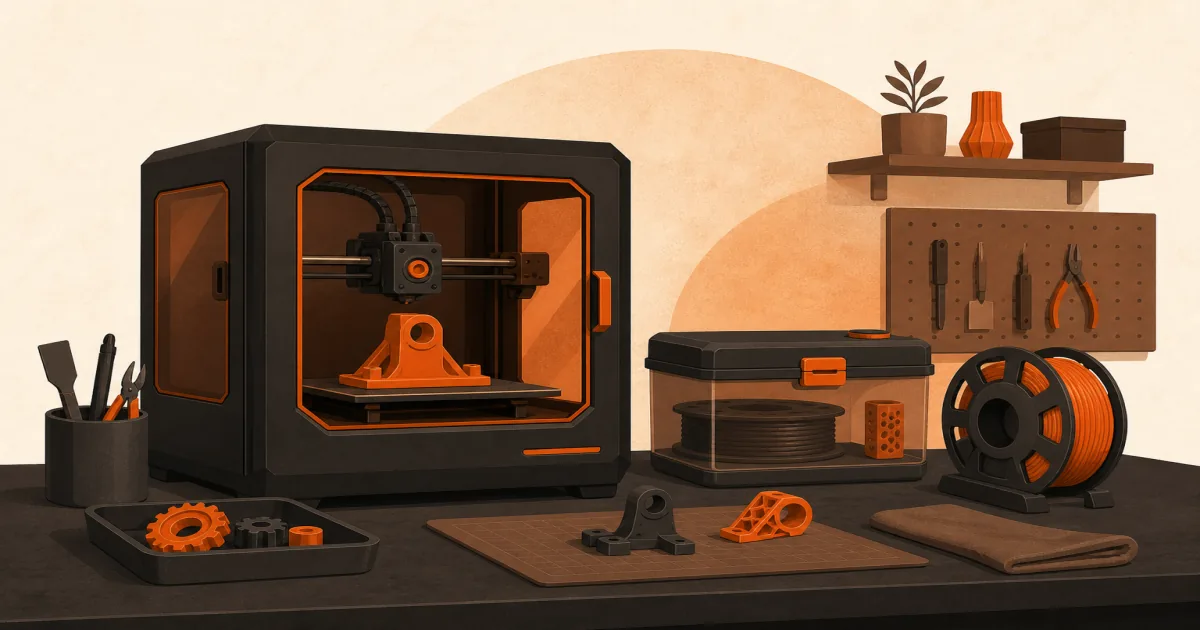
The short answer: Buy the QIDI Q2 3D Printer if nylon is a real goal and you want the chamber and nozzle path to match the material. Choose the Bambu Lab P1S Combo when you want the easier mainstream enclosed platform and plan to approach nylon more carefully.
Our picks
Nylon is the material people buy after a stronger bracket, hotter environment, or stiffer engineering part exposed the limits of everyday PLA and PETG. It is also the material that punishes lazy storage faster than almost anything on a home desk. If the filament is damp, the printer loses before the first layer proves anything.
That is why the right nylon printer is really a nylon system. The machine matters. The dry box matters. The room matters. If you still need to sort out general enclosed-printer tradeoffs, start with best enclosed 3D printer. If the larger problem is material handling, filament storage and filament dryer belong in the first third of the conversation, not the last.
Why nylon is harder than it sounds
Nylon is not difficult because the internet likes gatekeeping. It is difficult because it absorbs moisture quickly and asks more from chamber temperature, bed adhesion, and print discipline. That means a printer that feels “great” on PLA may feel mediocre the first time nylon enters the room.
This is also why a generic fast printer is not automatically the best 3D printer for nylon. Speed is secondary. Chamber control and material support come first.
Top pick: QIDI Q2
The QIDI Q2 is the best fit when nylon is the reason you are shopping. The heated chamber is the real selling point here, not the flashiest speed number. Nylon benefits from a warmer more controlled environment, especially as the part gets larger and more likely to warp or split.
The hotter nozzle path also matters because nylon and tougher engineering blends ask more than a standard beginner profile. If you plan to print this material on purpose, not just once for a weekend experiment, it makes sense to buy a machine that admits that reality up front.
This is the printer for brackets, fixtures, machine parts, and engineering-adjacent home jobs where nylon is not a novelty. It is more printer than a casual PLA desk needs, and that is exactly why it wins this page.
Easier mainstream option: Bambu Lab P1S Combo
The Bambu Lab P1S Combo is the easier mainstream option because it has the review depth and day-to-day usability that many home makers want before they commit to an engineering-material lane. It is still enclosed, which already puts it in a much better nylon position than an open budget printer.
This is the better answer when nylon is not the only material you plan to print and you want a machine that is still pleasant with ordinary filament. If most of your week is PLA, PETG, and occasional tougher projects, the P1S feels like a saner buy.
What it does not do is remove nylon discipline. Dry the spool. Confirm the right nozzle and profile. Keep expectations realistic on large parts.
Quick comparison
That is the decision. Buy the machine that matches how often nylon will actually be on the bed.
Drying is part of the printer choice
Nylon pulls moisture so quickly that the best machine in the world still prints badly with a wet spool. That is why a nylon setup almost always includes a real storage and drying plan. If you are not ready for that, the material is not ready for you either.
Use filament storage to keep open rolls sealed, and keep a filament dryer ready for the spool you plan to print this week. The machine and the spool are a package deal.
Chamber heat and enclosure matter
You can brute-force small nylon parts on less suitable hardware. That is not the same thing as buying well. Chamber warmth helps reduce the draft shock and layer stress that make nylon feel random on underprepared printers.
That is why this page is different from best 3D printer for ABS. ABS already wants an enclosure. Nylon often wants even more respect for drying and chamber control.
What nylon jobs actually justify the hassle
Nylon makes sense when you need a tougher, more durable part with some flex and heat tolerance, or when the project has a real mechanical reason to leave PETG behind. Good examples are wear-prone brackets, snap-fit parts, and tougher machine-adjacent pieces.
It is not the right answer for every hook, organizer, or toy. Many people should stay on PETG until the part clearly demands more. That is not settling. It is buying like an adult.
When to step into carbon-fiber nylon
Carbon-fiber nylon sounds like the final boss material because, in a home setup, it often is. If you are already shopping that lane, read best carbon fiber filament before ordering a spool. Carbon adds abrasion and nozzle wear on top of normal nylon discipline.
For most people, plain nylon competence should arrive first.
When to skip a nylon printer
Skip this category if you mostly print desk toys, organizers, or low-stress brackets. Skip it if you do not want to manage dry boxes and storage labels. Skip it if you really need a broad first printer. In those cases, best 3D printer or best 3D printer for beginners is the better owner page.
Nylon is a material-specific purchase, not a default.
Bottom line
The best 3D printer for nylon is the QIDI Q2 because it treats chamber heat and higher-temperature materials like the main event instead of an afterthought. The Bambu Lab P1S Combo is the easier mainstream enclosed option when nylon is only part of the plan. In both cases, buy the dry-box habit with the printer or do not buy nylon at all.
Frequently Asked Questions
What is the best 3D printer for nylon for most home buyers?
If nylon is truly the goal, the QIDI Q2 is the better fit because the heated chamber and hotter nozzle path line up with the material instead of fighting it.
Can I print nylon on an open-frame printer?
Small parts can sometimes work, but home buyers usually have a much better time with an enclosed machine and dry filament.
Why does nylon need a dryer so badly?
Nylon absorbs moisture fast. Wet nylon ruins tuning and makes people blame the printer for a spool problem.
Is the Bambu P1S enough for nylon?
It can be the more approachable home path for lighter nylon use, but you still need dry filament, the right nozzle setup, and realistic part expectations.
Do I need a heated chamber for nylon?
It helps a lot, especially on larger parts. Chamber control is one of the main reasons the QIDI pick wins here.
Should I buy nylon or carbon-fiber nylon first?
Buy plain nylon only if the part truly needs it. Carbon-fiber nylon is even less forgiving and belongs after basic nylon discipline exists.
Is nylon better than PETG for every functional part?
No. Nylon is stronger medicine. PETG already solves many household brackets and mounts with far less hassle.