Best ASA Filament: Outdoor Parts Without ABS-Level Regret
ASA makes more sense than ABS when the print has to live in sun, heat, and weather. Start with a reliable black spool and an enclosed printer that can keep drafts away.
By Harper Lin
3Dprintpicks is reader-supported. As an Amazon Associate we earn from qualifying purchases. Learn more.
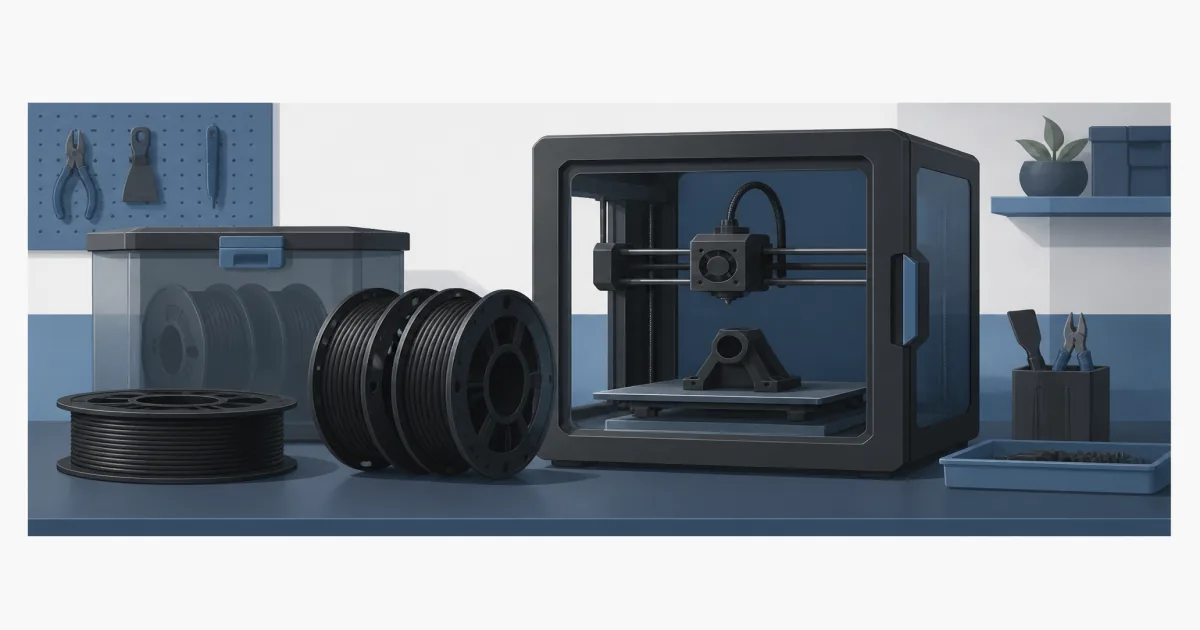
The short answer: Buy OVERTURE ASA Filament 1.75mm if you want the safest first ASA spool for outdoor parts. Use SUNLU ASA when you already trust your enclosure setup and want a better value roll. Choose iSANMATE ASA when you want a tighter-tolerance black spool for fresh functional builds.
Our picks
ASA is what many home makers wanted ABS to be the first time a PLA part sagged in summer. It still wants heat control, a steady room, and dry storage. The upside is simple: better weather resistance for outdoor brackets, clips, covers, and light-exposed parts.
This page stays on the spool choice. If you are still deciding whether the machine can handle the material, start with best 3D printer for ABS and 3D printer enclosure. If the real question is indoor heat resistance without sun exposure, best ABS filament is the better sibling.
Why people buy ASA instead of ABS
ABS is still useful, but outdoor parts are where ASA earns its keep. Sun and weather are the whole pitch. If you are printing a hose bracket, mailbox clip, garden sensor mount, or any part that lives near UV and heat, ASA makes more sense than pretending PLA or ABS will stay happy forever.
That does not mean every printer should run ASA every weekend. The material still punishes drafts. It still asks for a warm enclosure and a sensible room. A bad setup can make a good spool look awful.
Top pick: OVERTURE ASA
OVERTURE ASA Filament 1.75mm is the easiest first recommendation because the listing has enough real review history to trust and the material story is honest. It is for outdoor parts, not decorative “engineering filament” theater.
Choose it when you want one black spool that covers the normal ASA jobs: clips, covers, brackets, and sun-exposed utility parts. It is not a magic anti-warp potion. It is the spool we would rather learn on because enough buyers have already done the boring trial-and-error work.
If your printer still lives on an open frame next to a window, OVERTURE will not save that setup. Fix the enclosure problem first, then judge the spool.
Best value: SUNLU ASA
SUNLU ASA is the value lane when you already know your printer can hold a stable chamber and you are printing more than one part. That matters because ASA is rarely a one-cube experiment. People usually buy it for practical outdoor use, then burn through the first kilo faster than expected.
The review count is strong for a material category that is smaller than PLA or PETG. That gives this pick more confidence than a random low-volume ASA listing with polished product photos and no ownership notes.
Use SUNLU when the part has to live outside and the real question is cost per functional print, not glossy shelf appeal.
Tight-tolerance option: iSANMATE ASA
iSANMATE ASA is the newer-feeling option here, but it still clears the live-listing and review bar with enough genuine buyer notes to count. The reason to choose it is not hype. It is the tighter stated tolerance and straightforward functional-part positioning.
That makes sense for makers printing mounts, covers, and repeatable shop parts who want a fresh current listing without dropping into no-name territory. It is still the third pick because the review trail is shorter than OVERTURE and SUNLU.
If you like testing newer material listings once your machine settings are stable, this is the one to try before wandering into sketchier ASA pages.
Quick comparison
This is a three-lane decision, not a trophy ceremony. All three can work. The right pick depends more on your printer habits than on tiny marketing claims.
Settings and room habits matter more with ASA
ASA is not a material to troubleshoot by chaos. Start with the maker temperature range, keep the bed clean, use a brim on large flat parts, and change one variable at a time. If corners lift, look at drafts and chamber temperature before you declare the spool bad.
Dry the filament if it has sat open. A filament dryer is a cheaper fix than replacing a whole roll because the print looked foamy and weak. Store the spool sealed between jobs just like you would with any technical material that costs more than daily PLA.
What to print first
Your first ASA job should be small and useful. Print a bracket, clip, or cover that actually lives outside. Do not make your first test a huge tray or cosplay shell. Wide flat parts exaggerate every enclosure and adhesion mistake.
A small outdoor part tells you whether the spool, the room, and the profile agree. If it works, scale up. If it fails, you learned something real without wasting half a kilo.
When to skip ASA
Skip ASA if the part lives indoors and does not need heat or UV resistance. Skip it if you still fight first layers on PLA. Skip it if the printer is open-frame and the room is drafty. In those cases, best 3D printer filament or best ABS filament is the saner page.
ASA is great when the job needs it. It is annoying when the job does not.
Bottom line
The best ASA filament for most home desks is OVERTURE ASA Filament 1.75mm because it has the best balance of review confidence, outdoor-fit use cases, and predictable buying risk. Move to SUNLU ASA for better batch value, or iSANMATE ASA when you want a newer tight-tolerance listing for functional parts. Match the spool to an enclosure and an outdoor job, not to a forum dare.
Frequently Asked Questions
What is the best ASA filament for most home printers?
OVERTURE ASA is the easiest place to start because it has the best mix of review depth, outdoor-ready positioning, and predictable black-spool use cases.
Is ASA better than ABS for outdoor parts?
Usually, yes. ASA is the plastic people buy when the part will sit in sun, weather, or a hot mailbox. ABS still works indoors, but ASA is the smarter outdoor lane.
Do I need an enclosure for ASA?
For reliable home results, yes. ASA still shrinks as it cools, so a drafty room can ruin a wide flat part fast.
Does ASA smell like ABS?
It can still smell sharp compared with PLA or PETG. Ventilation matters. Treat it like a more demanding material, not like a casual weeknight PLA swap.
Should I dry ASA filament before printing?
If the spool has been open, yes. Wet ASA turns tuning into guesswork. Drying is cheaper than blaming the slicer.
Can I print ASA on an open-frame printer?
Small parts sometimes work in a warm still room, but most home buyers will have a calmer time with an enclosed printer or enclosure tent.
Is ASA harder to print than PETG?
Yes. PETG asks for drying and a careful first layer. ASA adds enclosure and room-control homework on top of that.