Best FDM 3D Printer (2026): CoreXY, Open Frame, and Budget Bed Sliders
Printers
The best FDM 3D printer melts plastic filament into tough parts you can live with on a desk. P1S Combo for enclosed growth, A1 for open-frame value, Ender 3 V3 SE when the budget bed is the hard limit.
Our picks
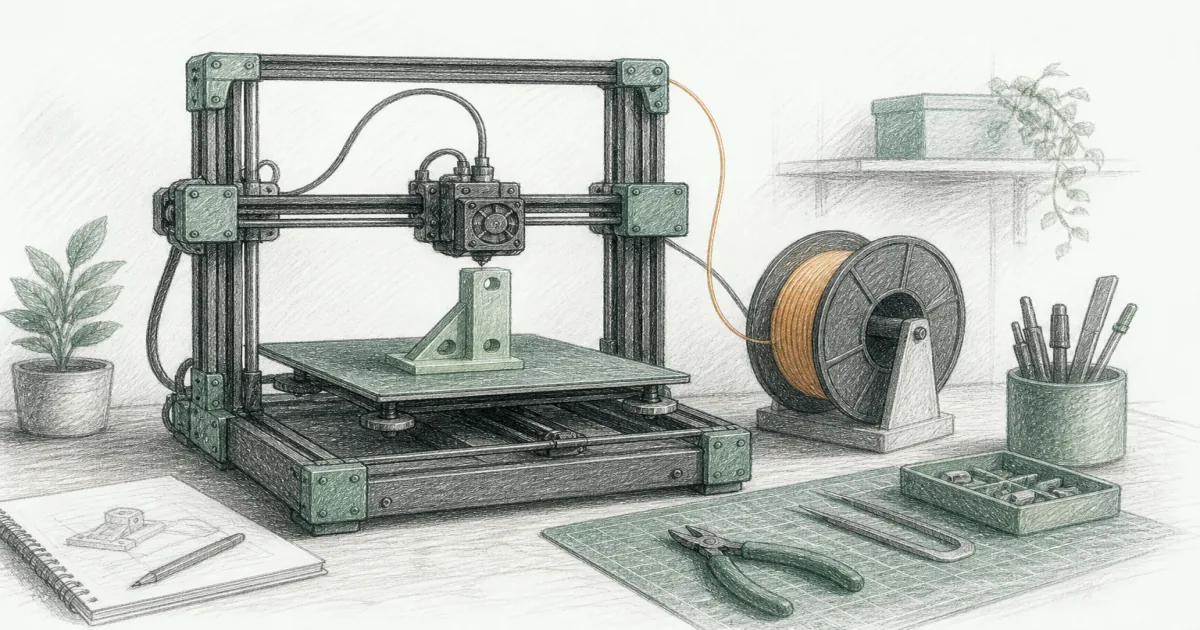
FDM printing is the filament path: a spool feeds plastic into a hot nozzle, and the part grows layer by layer on the bed. If you searched best FDM 3D printer, you already ruled out resin vats and wash stations. You want tough brackets, organizers, and cosplay props you can sand without gloves.
Browse the full printers hub for every buying lane. Our general best 3D printer guide covers the same home-desk framing. This page owns the FDM technology lane and pairs with best resin 3D printer when detail work belongs on a different machine.
What makes a good FDM printer at home
A good home FDM printer finishes a first useful part without a weekend of forum threads. Auto bed leveling matters more than peak speed numbers. Quiet travel helps when the machine sits beside a monitor. A bed big enough for your next three projects matters more than a spec sheet bragging about 600 mm/s.
CoreXY machines move the toolhead while the bed stays mostly still. That feels smoother and faster on many desks. Cartesian bed slingers move the bed on Y while the gantry handles X and Z. They cost less and teach classic maintenance habits. Neither is wrong. Match the frame to your budget and noise tolerance.
FDM vs resin on the same desk
You can own both later. Do not expect one open-frame FDM machine to replace resin detail, or one resin printer to replace a tough PETG bracket that survives a drop.
Top pick: Bambu Lab P1S Combo
The Bambu Lab P1S Combo is our default FDM answer when the desk can handle a mid-range machine. The enclosed body holds heat for PETG and light ABS jobs in drafty rooms. AMS ships in the combo, so multi-color PLA is not a scavenger hunt for a separate cart.
CoreXY motion keeps the bed stable while the toolhead moves fast. Auto bed leveling removes the paper-feel ritual that burned out older Ender owners. If your first three months include ASA or long PETG prints, the sealed chamber is worth the spend.
Skip it if you only want cheap PLA toys and refuse mid-range money. The A1 or Ender path is more honest for that lane.
Open-frame value: Bambu Lab A1
The Bambu Lab A1 is the open-frame CoreXY pick when you want a larger bed without paying for a sealed chamber. Full auto calibration covers Z-offset, bed leveling, and vibration tuning, which is why many beginners finish a useful part the same evening.
Build volume beats mini printers, so organizers and medium props fit more often. The tradeoff is clear: ABS and ASA prefer a sealed chamber. Keep this machine on PLA, PETG, TPU, and support filaments unless you add a solid enclosure later.
Budget bed slinger: Creality Ender 3 V3 SE
The Creality Ender 3 V3 SE shows why FDM still has a cartesian lane. CR Touch auto leveling and a Sprite direct drive cover the usual beginner traps on a 220 mm bed. You assemble more than on a Bambu, and the frame is louder, but the price-to-volume ratio still wins when the budget is the hard limit.
This is the honest pick when you want a larger plate for props and jigs and can follow a short build guide. It is not the quietest desk experience. Pair it with our best PLA filament guide and a simple scraper habit.
CoreXY vs bed slinger in five minutes
Measure the footprint before you click buy. Leave clearance for the spool path, cable strain relief, and a scrap bin. A compact printer that overhangs a floating shelf will vibrate and annoy you.
Filament, drying, and first-week workflow
Start with one dry PLA spool. Print a calibration cube, then a bracket you actually need. Do not open six specialty materials before the first layer sticks.
PETG teaches adhesion and cooling without the full enclosure tax. ABS and ASA belong after you have ventilation and, ideally, a sealed chamber. Damp filament causes stringing that looks like a bad printer. Our filament dryer guide covers the fix before you blame the nozzle.
Keep a scraper, isopropyl alcohol for the plate, and a simple log of temps that worked. That boring loop beats buying a second machine because the first one "does not work."
Noise, smell, and apartment realities
PLA is usually low odor. PETG can smell sharper on long prints. ABS and ASA need ventilation even inside an enclosure. If you share a small bedroom, run PLA overnight and save engineering filaments for daytime with a window cracked.
Put the printer on a solid table. Foam pads can help, but a wobbly desk broadcasts every travel move. Neighbors notice vibration more than raw decibel numbers.
When FDM is the wrong first buy
Wait if your only goal is one figurine a year and you care about paint-ready detail. A resin lane like best resin 3D printer may fit better. Buy FDM now if you already have three functional models queued and a clear desk corner.
Used machines can work, but price missing AMS parts, worn PEI, and unknown crash history. For a first FDM buy, a current listing with a clear return window is usually less stressful than a mystery local deal.
Bottom line
The best FDM 3D printer is the one that matches your room and your first three months of filament jobs. For most homes that still means the Bambu Lab P1S Combo. Drop to the Bambu Lab A1 for a larger open CoreXY frame, or the Creality Ender 3 V3 SE when budget and bed size beat quiet speed. Keep resin for miniatures, and keep PLA dry before you chase new hardware.
Frequently Asked Questions
What is the best FDM 3D printer for most homes?
For most desks that want filament printing without resin mess, the Bambu Lab P1S Combo is our top FDM pick. Choose the Bambu Lab A1 for a larger open frame, or the Creality Ender 3 V3 SE when budget and bed size matter more than quiet CoreXY speed.
What does FDM mean in 3D printing?
FDM (fused deposition modeling) builds parts by melting plastic filament through a hot nozzle, layer by layer. It is the common spool-and-nozzle path most home makers mean when they say "3D printer."
Is FDM better than resin printing?
FDM is better for brackets, organizers, and tough PETG parts you handle daily. Resin wins on miniatures and fine detail. Many makers own one of each for different jobs.
Do I need an enclosed FDM printer?
Not for PLA. Enclosed FDM helps when you print PETG in a drafty room, or when you want ABS and ASA without fighting warping every plate.
What filament should I run first on an FDM printer?
Start with one dry PLA spool from a trusted brand. Move to PETG after you can finish a calibration cube and a useful bracket without stringing.
Can a budget bed slinger match a CoreXY FDM printer?
For PLA toys and simple parts, yes. CoreXY machines feel faster, quieter, and more polished on auto calibration. Bed slingers still earn their place when the budget and a 220 mm plate are the real limits.
How loud is an FDM printer in an apartment?
Enclosed CoreXY printers like the P1S are usually quieter than open bed slingers. Put any FDM machine on a solid table. Hollow desks amplify vibration more than people expect.
Should I buy FDM or resin first?
Buy FDM first if you want functional parts, shared rooms, and low cleanup. Buy resin first only when miniatures or jewelry masters are the main goal from day one.