Translucent PLA Filament: Clear Parts Without Cloudy Walls
Translucent PLA filament is for light, not for fake glass strength. Start with a proven clear spool, keep walls thin, and dry the roll before you chase slicer tricks.
By Harper Lin
3Dprintpicks is reader-supported. As an Amazon Associate we earn from qualifying purchases. Learn more.
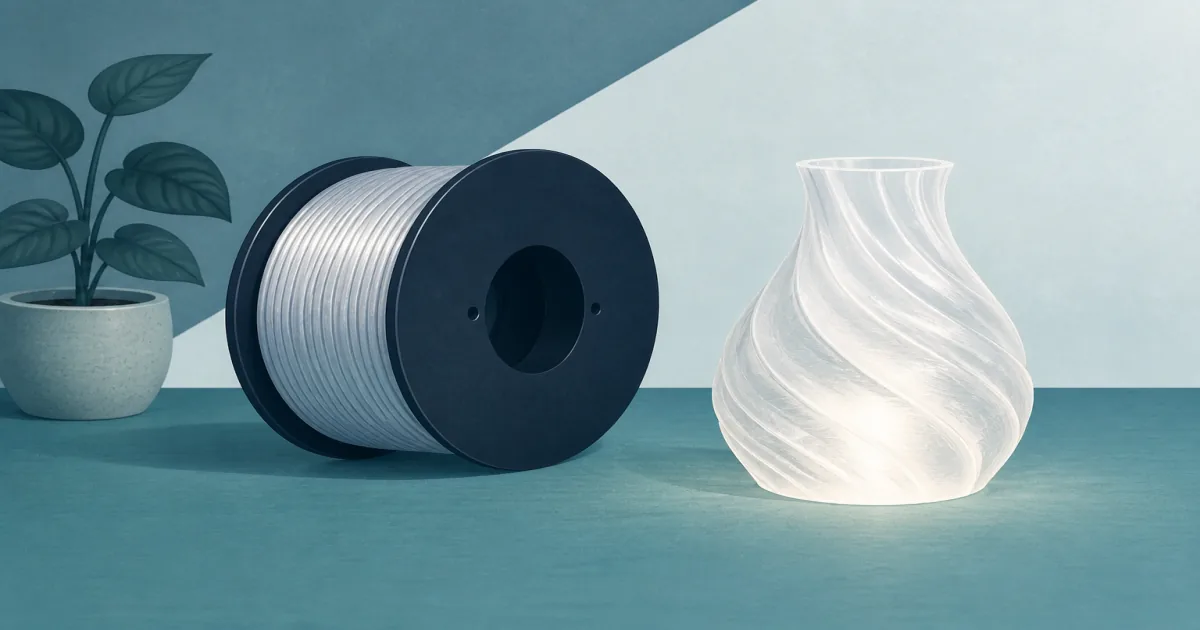
The short answer: Buy SUNLU transparent PLA when you want clear lampshades and see-through props without inventing a new workflow. Keep ELEGOO translucent PLA as the alternate brand if you already trust that line. Thin walls matter more than brand slogans.
Our picks
Translucent PLA filament is for parts that should pass light. Think lampshades, cosplay visors, display windows, and prototype covers where you want to see a LED or a mechanism underneath. It is not magic glass. It is still PLA, with PLA heat limits and PLA brittleness.
If you only need a nicer surface, not light, start with best PLA filament or a finish-specific roll like silk PLA or matte PLA. If the real question is which plastic family to buy first, best 3D printer filament is the broader owner page.
What translucent PLA is actually good at
Clear and translucent PLA shine when the model is thin enough for light to survive. Two or three walls often look clearer than five. A 0.2 mm layer height with patient cooling usually beats slamming speed and hoping the spool “looks crystal” in the photos.
Design for light paths. Solid blocks of clear PLA look like cloudy plastic bricks. Shells, windows, and ribs look intentional.
Hero pick: SUNLU transparent PLA
SUNLU PLA 3D Printer Filament, Transparent is the spool most home desks should buy first. It prints like ordinary PLA, so you are not learning a new material and a new lighting problem on the same night. The review trail is long enough that feeder and diameter complaints are already filtered by thousands of buyers, not ten glowing first posts.
Use it for lampshades, night-light housings, and props where the LED is the whole point. Keep the spool sealed between jobs. Clear PLA shows moisture as haze and stringing before opaque colors do.
Strong alternative: ELEGOO translucent PLA
ELEGOO PLA 3D Printer Filament Translucent is the pick when you want another major brand on the shelf, or when SUNLU clear is out of stock in the size you need. The printing feel is still PLA-class: approachable temperatures, low drama, and the same wall-count rules.
Skip it if you need outdoor toughness or hot-car heat. That is not a translucent PLA job.
Settings that keep clear parts clear
Print cooler within the PLA range if layers look frosty. Slow the outer wall a little so each perimeter lays down clean. Lower wall count until the part still feels solid enough for the job. Ironing can help flat tops, but it will not rescue a five-wall cube.
Dry the spool when prints pop or haze. A simple filament dryer is cheaper than reprinting the same cloudy shade three times.
Design habits that beat “buy a clearer spool”
Sketch the light path before you slice. A lampshade with 1.2 mm walls and open vents will outperform a solid 6 mm “crystal” block every time. Put ribs on the dark side of the shade so they do not cast ugly bands across the glow.
If you need logos or text in the clear area, keep them shallow. Deep engraved letters fill with shadows and look dirty even when the plastic is fine.
Cosplay visors and helmet windows need a second thought for impact. Translucent PLA can look right in photos and still crack when the helmet hits a table. For wearable parts that take hits, print a thin clear shell for looks and a tougher frame underneath, or move to a different material family.
Projects that fit (and ones that waste the spool)
Good fits: LED lampshades, desk night lights, display cases for miniatures, see-through prototype covers, and props where a glow is the point. Weak fits: phone mounts, tool hooks, outdoor clips, and anything that sits in a hot car.
If your real goal is a shiny finished look without light passing through, stop here and buy silk PLA filament. If you want frosted cosmetics, use matte PLA filament. Translucent PLA is a lighting choice, not a finish fashion choice.
Common translucent PLA mistakes
Printing a solid cube to “test clarity,” then deciding the brand is cloudy. Overbuilding walls until the part is stiff and opaque. Leaving the bag open for a humid week. Running a dirty nozzle after black PLA and blaming the clear spool for a greenish tint. Chasing 0.08 mm layers on a machine that still struggles with a clean 0.2 mm outer wall.
Another mistake is mixing translucent PLA expectations with clear PETG toughness. Clear PETG can survive more abuse. It also wants drier storage and cleaner temperature control. Do not swap them mid-project without changing the plan.
Buying checklist before you open the bag
Confirm 1.75 mm for your printer. Confirm you have a small lampshade or window test queued, not a twelve-hour helmet. Confirm you can seal the spool after the first print. Confirm the part is thin enough for light to matter. Price per kilogram matters less than finishing a spool that actually gets used for lighting jobs.
Soft CTA for the rest of the bench
Browse more filament and accessory guides on the blog, or start from the homepage if you are still building the full desk kit. Keep Amazon as the buy path for the spool you pick here.
When to skip translucent PLA
Skip it for structural brackets, outdoor mounts, and anything that must survive a drop onto concrete. Skip it if your design needs five thick walls to stay stiff. Skip it if you really wanted flexible clear parts. That is a different material conversation.
Bottom line
Translucent PLA filament is a lighting tool. SUNLU transparent PLA is the first buy for most home FDM desks. Keep ELEGOO translucent PLA as the alternate brand. Thin walls, dry spools, and honest part design beat chasing a prettier product photo.
Frequently Asked Questions
What is the best translucent PLA filament for most home printers?
Start with SUNLU transparent PLA. It is the calm default for clear lampshades, windows, and display props on everyday FDM desks.
Is translucent PLA the same as clear PETG?
No. Translucent PLA is easier and more brittle. Clear PETG is tougher and wants drier storage and cleaner temperatures.
Why do my clear prints look milky?
Wall count and layer height. Extra perimeters scatter light. Use fewer walls, a bit more light transmission in the design, and dry filament.
Do I need a special nozzle for translucent PLA?
No. Standard brass is fine. Treat it like ordinary PLA for temperature, then tune walls for light instead of chasing exotic hardware.
Can translucent PLA replace glass or acrylic?
Not for real impact or heat. Use it for lamp covers, cosplay windows, and decorative see-through parts.
Should I dry translucent PLA?
Yes if the spool sat open. Wet clear PLA prints cloudy and stringy faster than people expect.
How is translucent PLA different from silk or matte PLA?
Silk and matte change surface finish. Translucent PLA is about light passing through the part. Different job, different spool.