Wood Filament: Print Parts That Look Like Timber, Not Plastic
Wood filament is PLA mixed with real wood fiber so prints sand, stain, and look less like toy plastic. Start with walnut or maple, use a slightly larger nozzle, and keep the spool dry.
By Nate Brooks
3Dprintpicks is reader-supported. As an Amazon Associate we earn from qualifying purchases. Learn more.
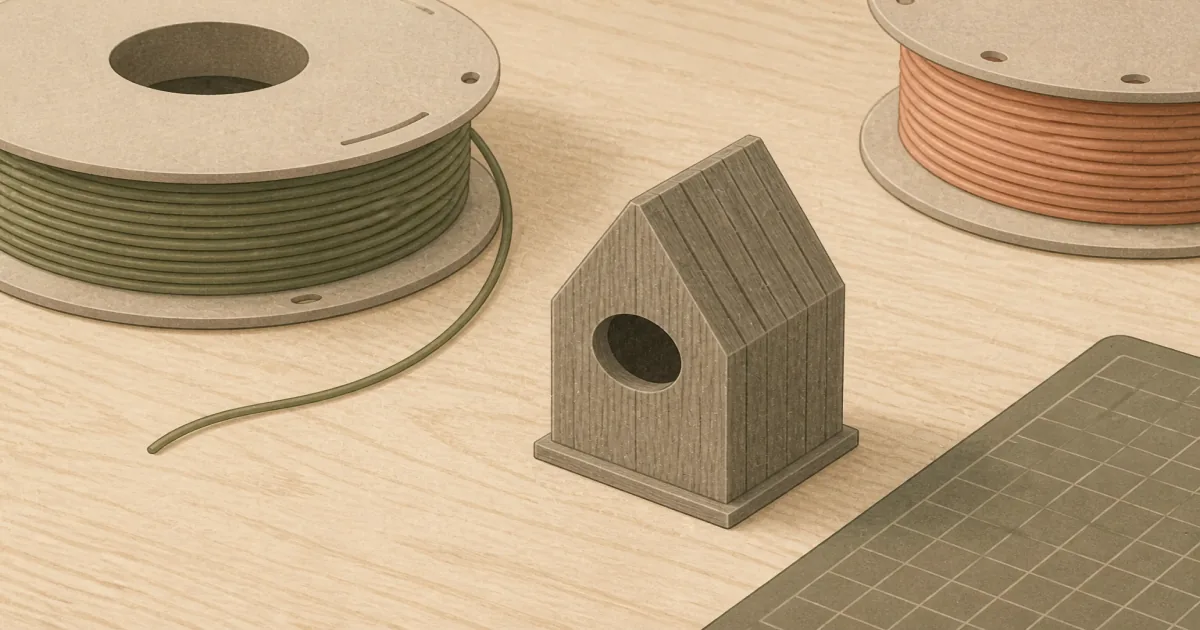
The short answer: Buy AMOLEN Wood Filament Dark Walnut (paid link) when you want deep décor and game-board parts. Choose SUNLU Real Wood Fiber Maple PLA (paid link) for lighter props, or Official Creality Wood Filament PLA (paid link) when you want a denser fiber finish. Print like PLA, then sand and stain if you want real timber character.
Our picks
Wood filament is how home makers get shelves, frames, and tabletop pieces that do not scream “printed plastic.” The base is still PLA. The wood fiber is what gives the matte grain, the light woody smell, and a surface you can sand.
If you are still choosing a daily PLA, start with best PLA filament. This page is for the specialty spool you buy once the machine already prints clean cubes.
What wood filament is (and is not)
It is not solid wood. It is plastic with fiber mixed in. You still get PLA heat limits. A thin phone mount on a summer dashboard will soften. A picture frame on a cool shelf will not.
The win is cosmetics. Layer lines hide better after a light sand. Stain pools in the fiber. Paint sticks without the glassy PLA sheen fighting you.
Skip wood filament for functional outdoor parts, food contact, or anything that needs PETG toughness. Use it for décor, terrain, architectural models, and gifts that should look hand-finished.
Top pick: AMOLEN dark walnut
AMOLEN Wood Filament Dark Walnut (paid link) is the décor spool. The dark walnut tone reads as stained timber from across a room. Buyers lean on it for boxes, plaques, and game boards where black PLA would look like a toy.
Print near your PLA profile, then nudge temperature if the surface looks too glossy or too fuzzy. Dark colors hide fine engraved text. If the part is mostly lettering, switch to a lighter maple tone.
Sand with fine grit before stain. Wipe dust. A thin wipe-on stain beats dumping oil into the first coat. Let it dry fully before wax.
Lighter pick: SUNLU maple
SUNLU Real Wood Fiber Maple PLA (paid link) is the brighter option. Maple shows sanding marks and grain effects more clearly than walnut. That helps architectural models and props that should look like unfinished birch rather than espresso furniture.
Keep retraction modest and dry the spool if stringing shows up. Fiber blends punish humid weeks faster than plain Hatchbox PLA. A sealed bag after the job matters more than a fancy open rack.
Dense fiber pick: Creality wood PLA
Official Creality Wood Filament PLA (paid link) is the denser fiber look. Higher wood content gives a silkier, richer surface on display prints. If your desk already runs Creality profiles, this spool is an easy next experiment after plain PLA.
Expect faster brass nozzle wear than with unfilled PLA. That is normal for abrasive fiber. Keep a spare 0.4 or 0.6 mm nozzle in the drawer and swap when first-layer lines start looking rough for no reason.
Settings that usually work
Change one thing at a time. If the nozzle clogs mid-print, raise temp a little, slow down, or move up a nozzle size. Do not keep forcing fiber through a worn 0.2 mm orifice.
First-layer adhesion is usually fine on a clean textured sheet. Wash oil off the plate before you blame the filament. Glue is optional. See 3D printer glue stick only if glass still skates after a wash.
Finishing without wrecking the print
Sand lightly with the grain of the layer lines, not across them like you are scrubbing a pan. Start fine. Aggressive grit digs trenches you will see under stain.
Stain is optional. Some people stop at sanding and a clear wax. Others push a dark stain into the fiber for furniture-like contrast. Test on a scrap cube first. Wood filament colors shift a lot once wet finish hits them.
Do not boil parts or leave them in a hot car to “set the color.” Heat softens PLA. Finish at room temperature.
Moisture, storage, and what to skip
Open wood spools get stringy and poppy after humid days. Dry before a long job if the roll sat out. Then bag it. Pair drying with filament dryer and sealed filament storage.
Skip mystery “wood look” PLA that is only brown pigment. If the listing never mentions wood fiber, you are buying colored PLA with a marketing photo. Real fiber listings talk about sanding, scent, and fiber percent.
Also skip wood filament as your first-ever spool. Learn the machine on plain PLA from best 3D printer filament. Specialty blends hide leveling mistakes under “artistic texture.”
Bottom line
Wood filament is a cosmetic PLA for parts that should look like timber. Start with AMOLEN Wood Filament Dark Walnut (paid link) for deep décor, SUNLU Real Wood Fiber Maple PLA (paid link) for lighter props, or Official Creality Wood Filament PLA (paid link) for a denser fiber finish. Use a sensible nozzle size, keep the spool dry, and sand before you stain.
Frequently Asked Questions
What is wood filament?
Wood filament is usually PLA mixed with real wood fiber or powder. It prints near PLA temperatures, then sands and stains more like soft timber than glossy plastic.
Do I need a special nozzle for wood filament?
A 0.4 mm nozzle can work on finer blends, but a 0.6 mm nozzle is safer when the fiber load is high. Wood fiber clogs small orifices faster than plain PLA. See 3D printer nozzles.
Can I sand and stain wood filament prints?
Yes. Light sanding opens the fiber. Wood stain, wax, or oil deepens the grain look. Wipe dust before finishing so the stain does not blotch.
Does wood filament smell while printing?
Many rolls smell faintly like wood or sawdust when hot. Vent the room if you are sensitive. It is not the same as ABS fumes, but it is not odorless either.
Is wood filament stronger than PLA?
Not in a useful structural way. Fiber can make parts feel stiffer or more brittle. Treat it as a cosmetic PLA, not a drop-in for PETG brackets.
How should I store wood filament?
Keep it sealed with desiccant. Fiber blends drink humidity and then string or pop. Use a filament dryer if the roll sat open, then seal it again in filament storage.
Will wood filament work in an AMS?
Many 1 kg spools fit with adapters. Check width and hub size. Neat winding matters more once automatic swaps start.