All Metal Hotend: When PTFE Lined Tips Hold You Back
An all metal hotend swaps the PTFE-lined heat break for metal so hotter filaments stop cooking the tube. Micro-Swiss fits many Creality frames. Keep spare silicone socks for the new block.
By Nate Brooks
3Dprintpicks is reader-supported. As an Amazon Associate we earn from qualifying purchases. Learn more.
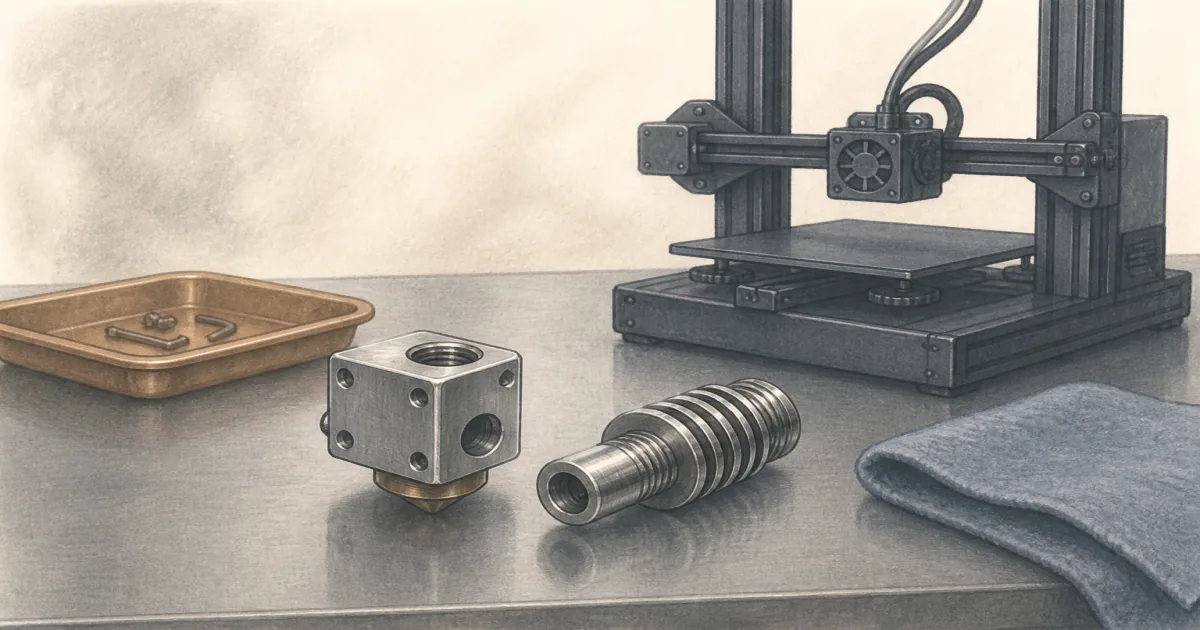
The short answer: Choose the Micro-Swiss All Metal Hotend Kit (paid link) when your Creality CR-10 or Ender-class printer still uses a PTFE-lined throat. Keep Microswiss MK7/MK8/MK9 Silicone Socks (paid link) on the shelf so the new block stays clean after the swap.
Our picks
An all metal hotend is not a speed sticker. It is the upgrade you buy when the stock PTFE liner softens, creeps, or blocks hotter filaments. Browse more bench upgrades in our accessories hub. Pair nozzle choices with the 3D printer nozzles guide before you rebuild the whole toolhead.
When the stock PTFE liner is the limit
PTFE-lined hotends are fine for PLA and many PETG jobs. Problems show up when you push temperature for nylon, polycarbonate, or long abrasive runs that cook the liner. Heat creep can also soften filament above the melt zone until the path plugs. You hear grinding, see thin extrusion, then pull out a chewed filament stub that never reached the nozzle.
If your printer already ships with a true all-metal path, you do not need this page for a first upgrade. Spend on filament, a cleaner plate, or a better nozzle instead. Save the wrench time for machines that still hide a white PTFE tube inside the throat.
Creality drop-in: Micro-Swiss all metal kit
The Micro-Swiss All Metal Hotend Kit (paid link) is the usual home-desk answer for CR-10 and many Ender 2 / 3 / 5 style mounts. The titanium heat break replaces the plastic liner so the melt zone stays where the block can control it. The kit includes a plated wear-resistant 0.4 mm nozzle and a silicone sock, which covers the common first install parts.
Confirm your cooling shroud and thermistor style before you wrench. A kit that fits an Ender 3 Pro may still fight a custom printed duct. Install with the nozzle hot-tightened per the maker sheet so plastic does not leak at the block.
Skip Micro-Swiss if your machine already uses a Sprite-style integrated head or a sealed Bambu toolhead. Those printers need their own all-metal parts, not a CR-10 drop-in.
Sock spare: Microswiss silicone covers
The Microswiss MK7/MK8/MK9 Silicone Socks (paid link) pack is the cheap half of the upgrade kit. A bare heater block collects PETG strings and fingerprints. Three covers mean you can tear one during a nozzle swap and keep printing. Sprite and Bambu blocks need different shapes. See silicone socks for 3D printers if your hotend is not MK8-class.
Install habits that keep the upgrade honest
- Photograph cable routing before you disconnect heaters and sensors.
- Seat the thermistor and heater fully, then strain-relief the wires.
- Hot-tighten the nozzle against the heat break so the gap does not weep.
- Run a PID tune and a short PLA tower before you jump to nylon.
- Slide a fresh silicone sock on before the first long job.
If PLA starts jamming after the swap, drop temperature a little, check cooling on the heat sink, and dry the spool. All-metal paths can be less forgiving of wet PLA than a soft PTFE liner.
Hotend vs nozzle vs sock
You can mix these. A metal heat break with a brass tip is fine for plain nylon. Abrasive filled nylon wants a hardened tip as well.
Materials that actually need the upgrade
PLA: Stay on the stock PTFE path until the liner is damaged. All-metal is optional, not required.
PETG: Many desks keep PTFE forever. Upgrade when heat creep shows up on long jobs or the liner browns.
ABS / ASA: An enclosure matters more than the hotend brand, but a cooked PTFE liner still fails. Metal helps once chamber heat is under control. See best enclosed 3D printer.
Nylon / polycarbonate: Plan on all-metal, dry filament, and a printer that can hold the temps. Pair with polycarbonate filament and best 3D printer for nylon before you spend on exotic spools.
Filled and glow mixes: Hardened nozzles matter as much as the heat break. Swap tips on a schedule once abrasives are normal.
Mistakes that waste an all-metal kit
Ordering the wrong mount family is the expensive one. Sprite, Bambu, and volcano-style blocks are not CR-10 drop-ins. Cold-tightening the nozzle so it weeps plastic is the messy one. Skipping PID after the swap is the quiet one that shows up as random underextrusion.
Do not raise temperature twenty degrees on day one to “use the metal.” Prove the install on dry PLA, then step into hotter materials with notes on the spool card.
If clogs return immediately, clear the path carefully and check for a gap between nozzle and heat break before you blame filament. The unclog guide still applies after an upgrade.
Soft CTA
Still building the drawer around the hotend? Keep 3D printer nozzles, silicone socks, and a tools kit together. Browse more bench gear on the blog or start from the homepage at /.
Bottom line
Buy the Micro-Swiss All Metal Hotend Kit (paid link) for common Creality CR-10 and Ender-class PTFE liners. Stock Microswiss silicone socks so the new block stays clean. Then dry the filament and prove the install on PLA before you queue a tall engineering part.
Frequently Asked Questions
What is an all metal hotend?
It is a hotend whose heat break is metal instead of a PTFE tube liner. The melt zone can run hotter without cooking plastic lining in the throat.
Do I need an all metal hotend for PLA?
No. Stock PTFE-lined hotends handle everyday PLA and many PETG jobs. Upgrade when heat creep, PTFE wear, or hotter materials become the limit.
Will an all metal hotend fix every clog?
No. Wet filament, a dirty nozzle, and bad retraction still jam prints. See how to unclog a 3D printer nozzle before you blame the heat break.
Can I print nylon after the upgrade?
An all-metal path is required for many nylon and polycarbonate profiles, but you still need enclosure heat, dry filament, and a printer that can hold those temps. See best 3D printer for nylon.
All metal hotend vs just a hardened nozzle?
A hardened nozzle fights abrasive fillers. An all-metal heat break fights PTFE limits and heat creep. Many abrasive jobs need both. See 3D printer nozzles.
Do I need a silicone sock?
A sock helps keep the block clean and steadies temperatures. Many kits include one. Replacements live in silicone socks for 3D printers.
Is firmware required?
Some printers need thermistor or PID tweaks after a hotend swap. Follow the kit instructions for your exact board and keep a backup of stock settings.